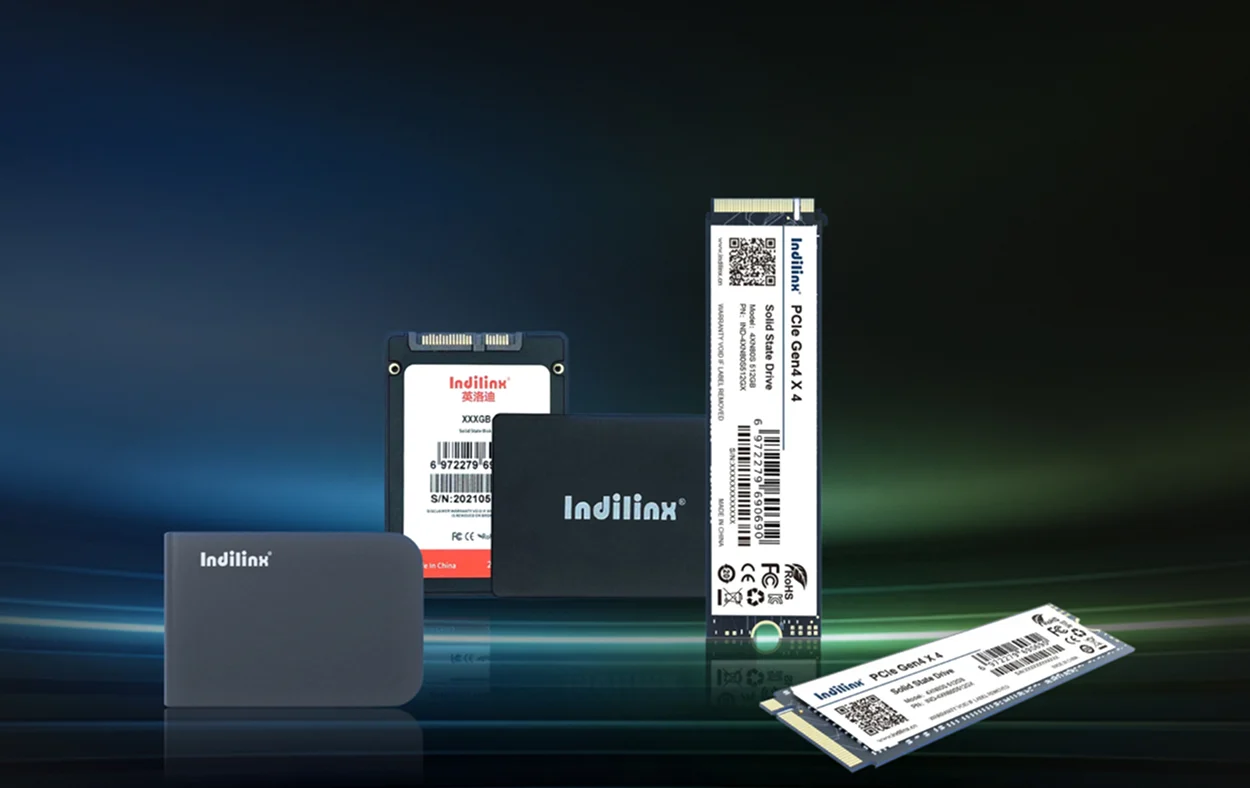










NAND flash type is one of the most important factors that determines NAND SSD performance. Although all NAND SSD products use NAND flash memory as the primary storage medium, different NAND architectures provide different levels of speed, endurance, storage density, and reliability. The number of bits stored in each memory cell directly affects how the SSD handles data read and write operations, as well as how long the storage device can maintain stable performance.
Common NAND flash technologies used in NAND SSD include SLC, MLC, TLC, and QLC. Each type has different characteristics and is designed for different performance requirements. Understanding the differences between these NAND flash types helps manufacturers select suitable NAND SSD solutions for specific applications, especially in industrial environments where reliability, long service life, and consistent performance are critical.
Understanding the Relationship Between NAND Flash Type and NAND SSD Performance
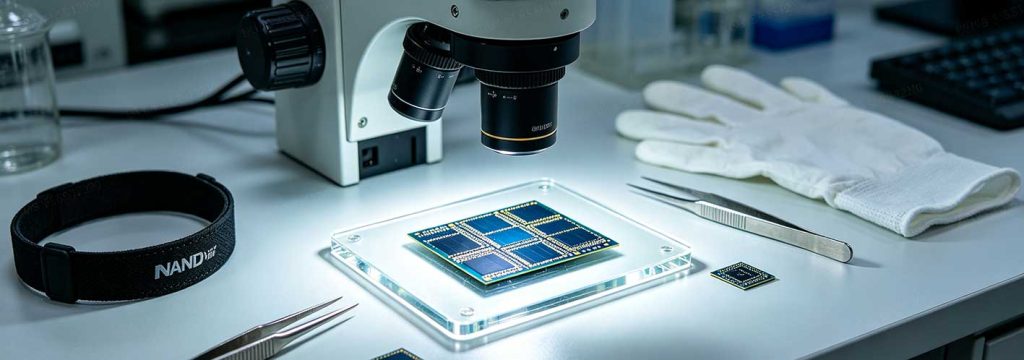
NAND SSD performance is closely related to the structure and characteristics of the NAND flash memory inside the device. NAND flash stores data by controlling electrical charges within memory cells, and the number of bits stored in each cell affects how accurately and efficiently data can be processed. Generally, NAND flash with fewer bits per cell provides faster data access and higher endurance, while NAND flash with more bits per cell increases storage capacity and reduces manufacturing costs.
The relationship between NAND flash type and NAND SSD performance is mainly reflected in three key areas: speed, endurance, and reliability. A NAND SSD designed with high-endurance NAND flash can handle more write operations and maintain stable performance over a longer period. On the other hand, higher-density NAND technologies allow SSD manufacturers to provide larger capacities for applications where storage space is more important than extreme write performance.
NAND Flash Cell Structure Determines NAND SSD Performance Characteristics
The internal structure of NAND flash cells directly affects the performance characteristics of a NAND SSD. Each NAND flash cell stores data by maintaining different electrical charge levels, and the number of bits stored in each cell determines how precisely the controller must manage read and write operations. When a memory cell stores fewer bits, the SSD can process data with fewer voltage states, which usually improves speed, accuracy, and endurance.
As NAND flash technology develops toward higher storage density, more data can be stored within the same physical space. However, increasing the number of bits per cell also requires more complex data management, which may affect write performance and durability. Therefore, the structure of NAND flash cells creates a direct connection between storage density, processing efficiency, and the overall performance of a NAND SSD.
Bit Density Affects NAND SSD Speed, Capacity, and Endurance Balance
The number of bits stored in each NAND flash cell is an important factor that influences the balance between NAND SSD capacity, speed, and endurance. Lower bit density allows memory cells to operate with simpler data states, resulting in faster access times and higher resistance to repeated write cycles. In contrast, higher bit density improves storage capacity by increasing the amount of data stored in each cell, but it requires more precise voltage control during data operations.
For NAND SSD manufacturers, selecting the appropriate NAND flash density depends on the target application requirements. Systems that require frequent data writing and long-term operation may prioritize endurance and stable performance, while applications focused on large storage capacity may benefit from higher-density NAND technology. Understanding this balance helps manufacturers develop NAND SSD solutions that match different performance expectations.
NAND Flash Technology Influences NAND SSD Reliability During Long-Term Operation
NAND flash technology also plays an important role in determining the long-term reliability of a NAND SSD. During normal operation, NAND flash cells experience repeated program and erase cycles, which gradually affect their ability to store electrical charges accurately. Different NAND structures have different levels of endurance, meaning the choice of NAND flash type can influence how long an SSD maintains stable performance under continuous workloads.
For industrial applications, reliability is often a critical factor when selecting a NAND SSD because storage devices may operate continuously in demanding environments. Factors such as write frequency, operating temperature, and data management efficiency must be considered together with NAND flash characteristics. By selecting suitable NAND technology and combining it with optimized SSD controllers and firmware, manufacturers can improve storage reliability and extend product service life.
How SLC NAND Improves NAND SSD Performance and Reliability

SLC (Single-Level Cell) NAND stores one bit of data in each memory cell, making it the simplest and most reliable type of NAND flash technology. Because each cell only has two possible voltage states, the controller can read and write data with higher accuracy and lower complexity. This structure allows SLC NAND SSD products to achieve excellent read/write performance, low error rates, and outstanding endurance.
The main advantage of SLC NAND is its ability to maintain stable performance under intensive workloads. Industrial applications that require continuous data recording, frequent writing, or long operating cycles often benefit from SLC-based NAND SSD solutions. Although SLC NAND has lower storage density and higher cost compared with other NAND types, its superior reliability makes it suitable for mission-critical systems where data stability is more important than storage capacity.
SLC NAND Provides Faster Data Access for NAND SSD Performance
SLC NAND improves NAND SSD performance by simplifying the way data is stored and processed inside each memory cell. Since each SLC cell stores only one bit of data, the SSD controller only needs to manage two possible voltage states during read and write operations. This simpler data structure reduces the complexity of voltage detection and error correction, allowing the NAND SSD to achieve faster response times, lower latency, and more consistent read/write performance during operation.
Compared with NAND technologies that store multiple bits per cell, SLC NAND requires fewer processing steps when programming and retrieving data. This allows the controller to handle storage operations more efficiently, especially during continuous write workloads. For applications that require fast data access, real-time processing, or stable response performance, SLC NAND provides advantages that help NAND SSD products maintain reliable operating speed under demanding conditions.
SLC NAND Enhances NAND SSD Endurance Through Reduced Cell Stress
The high endurance of SLC NAND comes from its simple cell structure and lower electrical stress during repeated data operations. Because each memory cell stores only one bit of information, the difference between programmed and erased states is relatively easy to control. This reduces the impact of charge variation and improves the accuracy of data storage, allowing SLC NAND to support significantly more program and erase cycles before performance degradation occurs.
For industrial NAND SSD applications, endurance is one of the most important factors affecting product lifespan. Storage devices used in industrial automation, embedded systems, transportation equipment, and data monitoring platforms may experience frequent write operations over long periods. By using SLC NAND technology, NAND SSD products can provide more stable long-term performance, reduce the risk of early wear, and maintain reliable operation throughout their expected service life.
Industrial Applications Benefit From SLC NAND SSD Reliability
SLC NAND SSD solutions are widely used in industrial environments where reliability, data integrity, and long-term stability are more important than maximum storage capacity. Many industrial systems require storage devices to operate continuously under demanding conditions, including frequent data logging, repeated write cycles, and extended operating periods. The stable characteristics of SLC NAND make it suitable for applications where unexpected storage performance changes could affect system operation.
Although SLC NAND SSD products generally have higher costs and lower storage density compared with other NAND technologies, they provide significant advantages in reliability and durability. For industrial customers, the higher initial investment can be offset by longer service life, reduced maintenance frequency, and improved system availability. Selecting SLC NAND allows manufacturers to develop NAND SSD solutions that deliver predictable performance and dependable data storage in critical applications.
SLC NAND Reduces Data Error Risks in Long-Term NAND SSD Operation
Data accuracy is a critical requirement for NAND SSD products used in long-term storage applications. Since SLC NAND stores only one bit per memory cell, each cell has fewer voltage states that need to be distinguished during data reading. This larger voltage margin improves signal stability and reduces the possibility of read errors caused by charge leakage, electrical interference, or gradual cell degradation during extended operation.
For applications that require reliable data retention and continuous availability, SLC NAND provides a strong foundation for maintaining storage integrity. When combined with advanced SSD controllers, error correction code (ECC), and effective firmware management, SLC-based NAND SSD products can further improve error handling capability and maintain stable data access performance throughout the product lifecycle.
SLC NAND Supports Stable NAND SSD Performance Under Heavy Workloads
Heavy workloads can place significant pressure on NAND SSD performance, especially in applications involving continuous data recording, frequent file updates, or intensive write operations. Higher-density NAND technologies may require more complex internal management during these conditions, which can lead to greater performance fluctuations. Due to its simple cell structure, SLC NAND can maintain more consistent write behavior and reduce performance variation during sustained workloads.
This stable operating characteristic makes SLC NAND SSD products suitable for industrial control systems, embedded computing platforms, and high-reliability equipment that require predictable storage performance. By maintaining consistent data processing capability under continuous operation, SLC NAND helps manufacturers reduce unexpected performance drops, improve system reliability, and ensure stable operation in demanding environments.
How MLC NAND Balances NAND SSD Performance and Storage Capacity

MLC (Multi-Level Cell) NAND stores two bits of data per memory cell, providing a balance between performance, endurance, and storage capacity. Compared with SLC NAND, MLC technology increases data density while maintaining relatively strong reliability. This makes MLC NAND SSD products suitable for applications that require both stable performance and reasonable storage capacity.
However, storing multiple bits in one cell requires more precise voltage control during data operations. As a result, MLC NAND generally has lower endurance than SLC NAND because each program and erase cycle creates greater stress on the memory cells. To improve reliability, modern NAND SSD solutions often combine MLC NAND with advanced controllers, error correction code (ECC), and wear leveling technologies to extend product lifespan and maintain consistent performance.
MLC NAND Increases NAND SSD Storage Density While Maintaining Performance
MLC NAND improves NAND SSD storage efficiency by storing two bits of data in each memory cell, allowing manufacturers to increase capacity without significantly increasing the physical size of the storage device. Compared with SLC NAND, which stores only one bit per cell, MLC technology provides higher data density while maintaining relatively strong read and write performance. This makes MLC NAND SSD products suitable for applications that require a combination of storage capacity and stable operating speed.
Although MLC NAND requires more precise voltage management because each cell contains multiple data states, its performance characteristics remain suitable for many enterprise and industrial storage applications. By optimizing the NAND controller and firmware algorithms, manufacturers can effectively manage data operations and maintain consistent performance. This balance between capacity improvement and operational reliability makes MLC NAND an important option for NAND SSD solutions that require moderate performance with increased storage efficiency.
MLC NAND Provides a Balanced Solution for NAND SSD Reliability and Capacity Requirements
MLC NAND is widely recognized for providing a practical balance between endurance, storage capacity, and performance in NAND SSD applications. While SLC NAND offers higher endurance due to its simpler cell structure, MLC NAND provides greater storage density by storing additional data within each memory cell. This allows manufacturers to develop NAND SSD products with larger capacities while maintaining acceptable reliability for many demanding workloads.
The reliability of MLC NAND depends not only on the flash technology itself but also on how the NAND SSD manages data during operation. Advanced controllers, error correction code (ECC), and wear leveling technologies help reduce the impact of repeated write cycles and improve overall endurance. Through effective data management, MLC-based NAND SSD products can achieve stable performance and longer service life in applications that require continuous operation and reliable storage.
NAND SSD Controllers Improve MLC NAND Data Management Efficiency
The controller inside a NAND SSD plays an important role in improving the performance and reliability of MLC NAND. Since MLC memory cells contain more voltage states than SLC cells, the controller must accurately manage data placement, error detection, and read/write operations. Advanced controller technologies help optimize communication between the NAND flash memory and the host system, reducing performance variations during daily operation.
By using intelligent algorithms, NAND SSD controllers can improve the efficiency of MLC NAND management and reduce unnecessary memory wear. Features such as bad block management, garbage collection, and error correction mechanisms allow MLC-based NAND SSD products to maintain more stable performance over extended operating periods. This combination of MLC NAND and optimized controller technology helps manufacturers achieve reliable storage solutions with improved cost efficiency.
Error Correction Technology Extends MLC NAND SSD Service Life
Because MLC NAND stores multiple bits in each memory cell, maintaining accurate data recognition becomes more challenging as the number of program and erase cycles increases. Error correction technology helps NAND SSD products identify and correct data errors caused by memory cell wear, electrical interference, or signal degradation. This capability is essential for maintaining reliable storage performance throughout the operational lifespan of the device.
Modern NAND SSD solutions commonly integrate advanced ECC technologies to improve data integrity and reduce the impact of NAND flash degradation. For industrial and embedded applications that require long-term reliability, effective error management allows MLC NAND SSD products to deliver consistent performance while supporting higher storage capacity requirements.
MLC NAND Supports Cost-Efficient NAND SSD Solutions for Industrial Applications
MLC NAND provides manufacturers with an effective way to develop NAND SSD products that achieve a balance between cost, capacity, and performance. Compared with SLC NAND solutions, MLC NAND offers higher storage density, which helps reduce the cost per gigabyte while still maintaining better endurance and reliability than many higher-density NAND technologies. This makes MLC NAND suitable for applications where both operational stability and storage efficiency are important.
In industrial and embedded environments, MLC NAND SSD products are often selected for systems that require reliable data storage without the highest endurance requirements of mission-critical applications. When combined with suitable controllers, firmware optimization, and effective thermal management, MLC NAND can provide stable long-term performance while meeting practical cost and capacity requirements.
How TLC and QLC NAND Influence NAND SSD Capacity and Speed
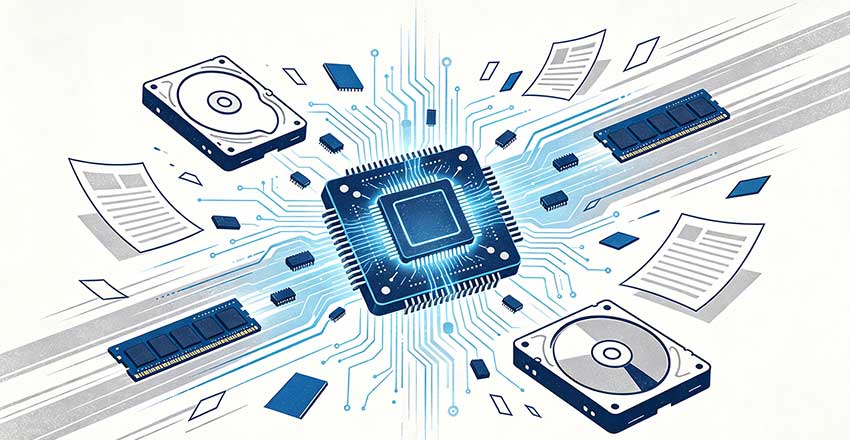
TLC (Triple-Level Cell) and QLC (Quad-Level Cell) NAND technologies increase storage density by storing three or four bits in each memory cell. This design allows NAND SSD manufacturers to produce higher-capacity storage devices at a lower cost per gigabyte. As data storage requirements continue to increase, TLC and QLC NAND have become widely used in many SSD products that focus on capacity and cost efficiency.
However, higher data density also creates challenges for NAND SSD performance. Because more voltage levels must be controlled within each cell, TLC and QLC NAND typically require more complex data management compared with SLC and MLC technologies. This may result in lower write endurance and slower write performance under heavy workloads. For applications requiring frequent data writing, manufacturers need to evaluate whether TLC or QLC NAND can provide sufficient reliability and performance.
TLC and QLC NAND Increase NAND SSD Storage Capacity Through Higher Data Density
TLC and QLC NAND technologies improve NAND SSD storage capacity by increasing the amount of data stored in each memory cell. TLC NAND stores three bits per cell, while QLC NAND stores four bits per cell, allowing manufacturers to achieve much higher storage density within the same physical space. This increased density enables NAND SSD products to provide larger capacities while reducing the cost per gigabyte, making them suitable for applications where storage volume is a primary consideration.
The higher storage efficiency of TLC and QLC NAND has contributed to their widespread adoption in modern storage devices. For applications such as data storage systems, consumer electronics, and embedded devices that require large amounts of storage capacity, high-density NAND technology provides practical advantages. By combining TLC or QLC NAND with optimized NAND SSD controllers and firmware, manufacturers can develop storage solutions that offer increased capacity while maintaining acceptable performance levels.
TLC and QLC NAND Require Advanced Management to Maintain NAND SSD Performance
Although TLC and QLC NAND provide significant capacity advantages, storing more bits in each memory cell increases the complexity of data management inside a NAND SSD. Each cell must maintain and distinguish more voltage levels during read and write operations, requiring more precise control from the SSD controller. These additional management requirements may affect write speed, response consistency, and endurance compared with lower-density NAND technologies.
To maintain reliable performance, modern NAND SSD products using TLC or QLC NAND rely on advanced controller technologies and firmware optimization. Functions such as intelligent data allocation, background management, and performance optimization help reduce the impact of higher cell density. Through effective system-level management, TLC and QLC NAND can provide a practical balance between large storage capacity, acceptable performance, and cost efficiency.
Workload Evaluation Determines TLC and QLC NAND SSD Application Suitability
The suitability of TLC and QLC NAND depends heavily on the workload characteristics of the target application. Systems that mainly perform read operations or require large storage capacity may benefit from the advantages of high-density NAND technology. However, applications involving frequent data recording, intensive write cycles, or continuous operation require careful evaluation of endurance and performance requirements.
For industrial NAND SSD applications, manufacturers should consider factors such as write frequency, expected service life, operating environment, and data reliability requirements before selecting TLC or QLC NAND. A suitable NAND SSD design combines the appropriate NAND flash type with controller technology and firmware optimization to ensure stable performance under specific operating conditions.
TLC and QLC NAND Provide Cost-Efficient Options for High-Capacity NAND SSD Solutions
TLC and QLC NAND technologies allow manufacturers to produce higher-capacity NAND SSD solutions with improved cost efficiency. By increasing the amount of data stored per memory cell, these technologies reduce the amount of NAND flash required for a given storage capacity. This advantage is particularly valuable for applications where storage volume and price efficiency are more important than maximum endurance.
However, selecting TLC or QLC NAND requires a clear understanding of application requirements. While these technologies provide excellent capacity advantages, they may not be suitable for every workload scenario. For industrial and embedded applications, manufacturers need to balance capacity requirements with expected data usage patterns to select the most appropriate NAND SSD solution. Proper evaluation ensures that high-density NAND technology delivers reliable performance throughout the product lifecycle.
How NAND Flash Type Affects NAND SSD Endurance and Service Life

NAND flash endurance refers to the ability of memory cells to withstand repeated program and erase cycles before performance degradation occurs. The NAND flash type directly influences endurance because storing more bits in each cell increases the complexity of voltage management and accelerates cell wear. In general, SLC NAND provides the highest endurance, followed by MLC, TLC, and QLC NAND.
For industrial NAND SSD applications, endurance is often more important than maximum storage capacity. Equipment used in manufacturing, automation, medical systems, or embedded applications may generate continuous data writes during operation. Selecting an unsuitable NAND flash type can lead to reduced SSD lifespan and unstable performance. Therefore, manufacturers should evaluate workload requirements and choose NAND SSD products with appropriate endurance characteristics.
NAND Flash Cell Structure Determines NAND SSD Endurance Performance
The structure of NAND flash memory cells has a direct impact on the endurance performance of a NAND SSD. Each program and erase (P/E) cycle causes physical stress to the floating gate or charge trap layer inside the memory cell. When a NAND cell stores more bits of data, it must support more precise voltage levels, which increases the difficulty of maintaining accurate data states over repeated operations.
SLC NAND generally provides the highest endurance because each cell stores only one bit of data and requires fewer voltage states. MLC, TLC, and QLC NAND increase storage density by storing more data per cell, but their endurance is comparatively lower due to increased programming complexity. Therefore, selecting the appropriate NAND flash type is an important factor when designing a NAND SSD for applications with different write demands.
Write Workload Requirements Influence NAND SSD Service Life Selection
The service life of a NAND SSD is strongly affected by the workload characteristics of the application environment. Systems that frequently write large amounts of data place greater stress on NAND flash cells because continuous program and erase operations accelerate cell wear. Industrial equipment, monitoring systems, automation controllers, and embedded devices often require storage solutions that can maintain stable operation under long-term write-intensive conditions.
When selecting a NAND SSD, manufacturers should evaluate factors such as daily data writes, operating hours, expected product lifetime, and data recording frequency. A storage device designed for light consumer workloads may not provide sufficient endurance for industrial applications with continuous data processing. Matching NAND flash type with actual workload requirements helps prevent premature performance degradation and improves long-term system reliability.
Endurance Specifications Help Evaluate NAND SSD Reliability
Endurance specifications provide important references for evaluating the expected lifespan of a NAND SSD under specific operating conditions. Common indicators such as program and erase cycle ratings, total bytes written (TBW), and drive write rate help manufacturers understand how much data a storage device can handle throughout its service life. These parameters allow system designers to compare different NAND SSD solutions according to actual application requirements.
For industrial applications, endurance evaluation should not rely on capacity alone. A higher-capacity NAND SSD does not always provide better durability if the NAND flash type is not suitable for the workload. By considering endurance specifications together with operating conditions and reliability requirements, manufacturers can select storage solutions that provide stable performance over extended periods.
NAND SSD Technology Optimization Extends NAND Flash Service Life
Although NAND flash type determines the basic endurance characteristics of a NAND SSD, additional technologies can significantly improve overall service life. Modern SSD controllers use advanced management methods to reduce uneven wear across memory cells and maintain stable operation throughout the product lifecycle. These technologies help maximize the usable lifespan of NAND flash and improve reliability in demanding applications.
Functions such as wear leveling, error correction code (ECC), and bad block management allow NAND SSD products to handle memory degradation more effectively. Wear leveling distributes write operations across different memory areas, while ECC helps detect and correct data errors caused by cell wear. Through these optimization technologies, manufacturers can improve NAND SSD durability and maintain consistent performance in industrial environments.
Selecting the Right NAND SSD Based on NAND Flash Requirements
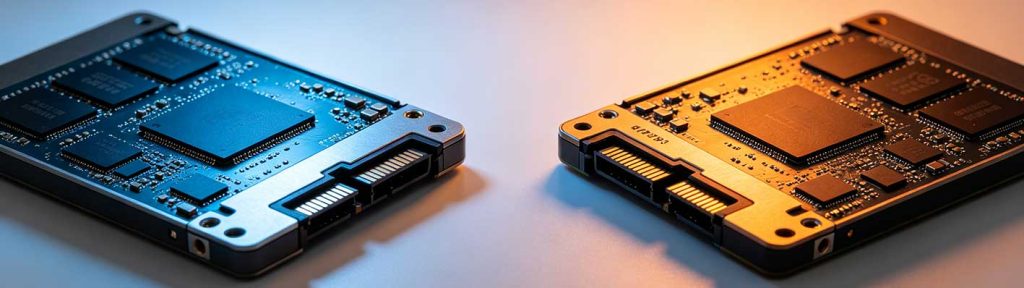
Choosing the correct NAND SSD requires understanding how NAND flash characteristics match the requirements of the target application. Applications with high write workloads, long operating hours, or strict reliability requirements usually require NAND SSD solutions based on higher-endurance NAND technologies. In contrast, applications that prioritize large storage capacity and cost efficiency may use higher-density NAND types with optimized controllers and firmware.
For industrial storage systems, NAND flash selection should consider multiple factors, including expected workload, operating environment, data reliability requirements, and product lifespan. A suitable NAND SSD solution combines the right NAND flash type with reliable controller technology and effective data management features. By selecting the appropriate NAND architecture, manufacturers can achieve better performance, longer service life, and more stable storage operation.
Application Workload Analysis Guides NAND SSD Selection
Selecting a suitable NAND SSD begins with understanding the workload characteristics of the target application. Different systems generate different levels of read and write activity, which directly influence the required endurance and performance of the storage device. Applications such as industrial automation, data logging systems, and embedded controllers often perform continuous write operations, requiring NAND SSD solutions with stronger endurance and long-term stability.
For applications with lower write intensity but higher storage requirements, NAND SSD products using higher-density NAND flash technologies may provide a more suitable balance between capacity and cost efficiency. Manufacturers should evaluate factors such as data update frequency, operating hours, and expected service life before selecting a NAND flash configuration. Matching the NAND SSD design with the actual workload helps prevent performance degradation and improves system reliability.
NAND SSD Specifications Provide Key Factors for Storage Solution Evaluation
Evaluating NAND SSD specifications helps manufacturers select storage products that meet performance and reliability requirements. Important factors include endurance ratings, storage capacity, read/write performance, operating temperature range, and data protection capabilities. These specifications provide a practical reference for comparing different NAND SSD solutions and determining whether a product is suitable for a specific application.
However, NAND SSD selection should not rely on a single specification alone. A device with higher capacity may not always provide the required endurance, while a high-endurance solution may not be necessary for applications with limited write activity. By analyzing multiple technical parameters together, manufacturers can identify a NAND SSD solution that provides the right balance between performance, durability, and cost efficiency.