









M.2 SATA SSD and traditional SATA SSD are both based on SATA storage technology, but they adopt different physical designs and system integration approaches. The main difference between them is not the storage protocol itself but the form factor, connection method, and installation structure. An M.2 SATA SSD uses a compact circuit board design that connects directly to the motherboard through an M.2 slot, while a traditional SATA SSD usually uses a 2.5-inch enclosure connected through SATA data and power cables. Understanding these design differences helps users select the appropriate storage solution according to device structure, available space, and application requirements.
Although both storage devices rely on NAND闪存 and SATA communication technology, their internal layouts and external installation methods create different advantages. M.2 SATA SSD focuses on compact integration and simplified system design, while traditional SATA SSD provides compatibility with a wider range of systems that support standard 2.5-inch drive bays. The difference between these two SSD designs is especially important for manufacturers, system integrators, and users who need to balance storage performance, hardware compatibility, and physical space limitations.
M.2 SATA SSD and Traditional SATA SSD Use Different Physical Designs

The most visible difference between an M.2 SATA SSD and a traditional SATA SSD is their physical structure. An M.2 SATA SSD is built on a small printed circuit board (PCB) without an external drive enclosure. The SSD components, including the controller, NAND flash memory, and supporting circuits, are directly mounted on the compact board. This design significantly reduces the physical size of the storage device and allows it to be installed directly onto a compatible motherboard or embedded system platform.
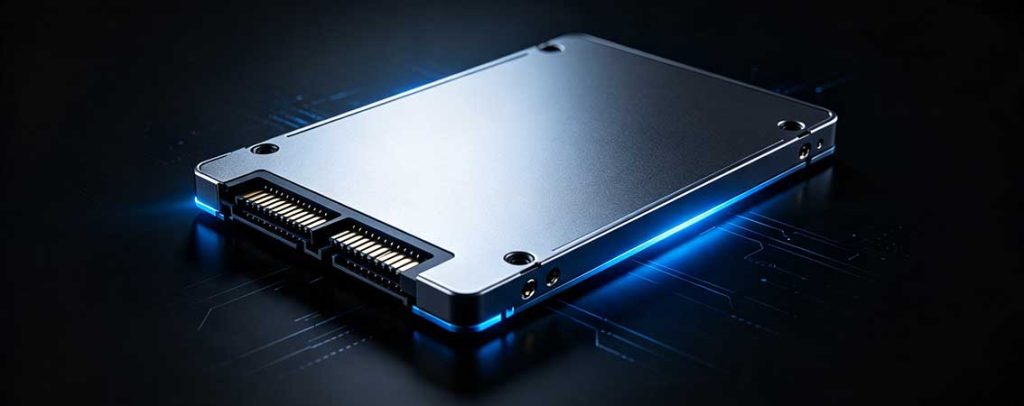
In contrast, a traditional SATA SSD usually adopts a 2.5-inch drive design that places the PCB and storage components inside a protective enclosure. This structure follows the same physical dimensions commonly used by traditional hard drives, making it compatible with many existing computer systems and industrial devices. However, the larger enclosure requires more installation space and usually relies on additional SATA cables for power and data transmission. The physical design difference determines how each SSD type fits into different hardware environments.
The smaller structure of an M.2 SATA SSD provides advantages in systems where space efficiency is important. For example, compact computers, embedded devices, and industrial control systems often have limited internal space, making a smaller storage form factor easier to integrate. Traditional SATA SSDs remain useful where standard drive compatibility and simple replacement are priorities. Therefore, the physical design difference between M.2 SATA SSD and traditional SATA SSD is mainly related to installation flexibility rather than fundamental storage technology.
M.2 SATA SSD Uses a Compact PCB Structure Instead of a Drive Enclosure
M.2 SATA SSD adopts a compact printed circuit board design that integrates the controller, NAND flash memory, and other electronic components directly onto a small circuit board. Unlike traditional SATA SSDs that require a protective 2.5-inch enclosure, M.2 SATA SSD removes the additional housing structure and focuses on minimizing the physical footprint of the storage device. This design allows manufacturers to place storage components closer to the motherboard and reduces the space required for installation.
The compact PCB structure provides greater flexibility for system designers, especially when developing devices with limited internal space. In applications such as embedded computers, compact industrial equipment, and lightweight computing systems, reducing storage dimensions can help optimize the overall product layout. Engineers can allocate more space for other hardware components while still maintaining reliable SATA-based storage performance.
However, the smaller physical design of M.2 SATA SSD does not change its fundamental storage technology. It still relies on the SATA protocol and NAND flash architecture, meaning its primary advantage comes from improved integration and reduced size rather than a different performance mechanism. Therefore, the physical design difference between M.2 SATA SSD and traditional SATA SSD mainly reflects different hardware integration strategies.
Traditional SATA SSD Maintains Compatibility Through Standard 2.5-Inch Design
Traditional SATA SSD follows the widely adopted 2.5-inch storage design that was originally developed for replacing mechanical hard drives. This standardized structure allows the SSD to fit into existing drive bays and connect with systems through conventional SATA data and power interfaces. Because of its long-established physical format, traditional SATA SSD remains compatible with a broad range of desktop computers, industrial systems, and upgrade platforms.
The enclosed design of traditional SATA SSD provides mechanical protection for internal components and simplifies installation in systems designed around standard storage bays. For equipment manufacturers and maintenance teams, this format offers advantages because replacement procedures and mounting solutions are already well established. This makes traditional SATA SSD a practical option for systems where long-term compatibility and easy servicing are important.
Compared with M.2 SATA SSD, the larger physical structure requires more installation space and additional connection components. However, this design trade-off provides strong adaptability across different platforms. The physical characteristics of traditional SATA SSD make it suitable for applications where system expansion, replacement convenience, and existing hardware compatibility are higher priorities than compact size.
M.2 SATA SSD and Traditional SATA SSD Have Different Interface Configurations

The interface configuration is another important difference between M.2 SATA SSD and traditional SATA SSD designs. Although both storage solutions use the SATA protocol for communication, they connect to the host system through different physical interfaces. An M.2 SATA SSD uses an M.2 connector on the motherboard, which allows the drive to communicate through the SATA interface without requiring separate data and power cables. This direct connection reduces cable requirements and simplifies system assembly.
A traditional SATA SSD uses a standard SATA interface that requires a SATA data cable connected to the motherboard and a separate power cable connected to the power supply. This connection method has been widely adopted in desktop computers, workstations, and industrial systems because of its compatibility and long-established design standards. However, the additional cables increase installation complexity and require more internal space for cable management.
It is important to understand that the M.2 form factor does not automatically mean higher performance. An M.2 SATA SSD still uses the SATA protocol, meaning its maximum performance is limited by the SATA interface bandwidth. The main advantage of M.2 SATA SSD comes from its compact connection method and easier integration rather than a completely different communication technology. Users comparing M.2 SATA SSD and traditional SATA SSD should evaluate interface compatibility first instead of assuming that a smaller design always provides faster storage performance.
M.2 SATA SSD Connects Through an Integrated Motherboard Interface
M.2 SATA SSD uses an M.2 connector to communicate with the host system, allowing the storage device to connect directly to the motherboard without separate SATA cables. This integrated connection method simplifies hardware installation because both data communication and power supply are provided through the M.2 slot. Compared with traditional SATA SSD solutions, this reduces cable usage and helps create cleaner internal system layouts.
The M.2 interface also provides a more flexible approach for manufacturers designing compact electronic devices. By eliminating external cables and reducing mechanical connections, system builders can improve internal organization and simplify product assembly. This advantage is especially valuable in applications where space limitations or automated production processes require efficient hardware integration.
However, users should understand that an M.2 connector does not automatically indicate NVMe performance. M.2 SATA SSD still communicates through the SATA protocol, and its performance characteristics remain within SATA bandwidth limitations. The main difference lies in the physical connection method rather than the underlying data transfer technology.
Traditional SATA SSD Uses Separate Data and Power Connections
Traditional SATA SSD relies on separate SATA data and power connectors to communicate with the host system and receive electrical power. This interface configuration has become a standard solution for storage devices because it provides broad compatibility across many computer platforms. The separate cable design allows flexible positioning inside larger systems and makes replacement relatively straightforward.
The independent connection structure also provides practical advantages in systems where storage devices need to be frequently upgraded or replaced. For example, desktop computers and industrial computers with standard drive bays can easily accommodate traditional SATA SSD through existing SATA infrastructure without redesigning the hardware platform.
Compared with M.2 SATA SSD, the cable-based interface requires additional installation space and may increase internal wiring complexity. However, this design remains valuable because of its proven compatibility and maintenance convenience. The different interface configurations between M.2 SATA SSD and traditional SATA SSD reflect different priorities: M.2 focuses on compact integration, while traditional SATA emphasizes flexibility and compatibility.
M.2 SATA SSD and Traditional SATA SSD Have Different Installation Requirements

The installation requirements of M.2 SATA SSD and traditional SATA SSD are significantly different because they are designed for different hardware structures. An M.2 SATA SSD requires a compatible M.2 slot that supports SATA-based M.2 devices. Before installation, users need to confirm motherboard specifications, connector compatibility, and available mounting positions. Different M.2 slots may support different protocols, such as SATA or PCIe NVMe, so compatibility verification is necessary to ensure proper operation.
Traditional SATA SSD installation follows a more standardized process. The drive is usually installed into a 2.5-inch drive bay or mounting bracket and connected through SATA data and power cables. Because this installation method has been used for many years, it is supported by a wide range of desktop computers, servers, and industrial equipment. The straightforward replacement process makes traditional SATA SSD a practical option for systems designed around conventional storage interfaces.
The different installation requirements influence how manufacturers design storage systems. M.2 SATA SSD is more suitable for compact platforms where reducing cables and saving internal space are important considerations. Traditional SATA SSD remains advantageous in systems where existing SATA infrastructure is already available. Selecting between these two SSD types requires evaluating the physical design of the target system, available connectors, and long-term maintenance requirements, similar to considerations when choosing mSATA SSD solutions.
M.2 SATA SSD Requires Compatible Motherboard Slots and Interface Support
The installation of an M.2 SATA SSD depends on whether the host system provides a compatible M.2 slot that supports SATA-based storage devices. Although M.2 has become a common physical interface for modern storage products, not every M.2 slot supports the same communication protocol. Some M.2 connectors are designed for PCIe NVMe 固态硬盘s, while others support SATA-based M.2 SSDs. Therefore, checking motherboard specifications and interface compatibility is an essential step before installing an M.2 SATA SSD.
Compared with traditional storage installation methods, M.2 SATA SSD installation usually requires fewer mechanical components. The drive is inserted directly into the M.2 connector and fixed with a mounting screw, eliminating the need for drive brackets, SATA cables, and separate power connections. This simplified installation structure helps reduce assembly complexity and allows manufacturers to design smaller systems with fewer internal components.
For industrial equipment and embedded platforms, interface compatibility becomes especially important because storage devices are often integrated during the product design stage. Engineers need to evaluate not only whether the system physically supports an M.2 slot but also whether the slot provides the correct SATA communication pathway. Proper compatibility planning ensures that the M.2 SATA SSD can operate reliably within the intended hardware environment.
Traditional SATA SSD Provides Easier Replacement Through Standard Storage Connections
Traditional SATA SSD installation is based on a mature and widely used storage connection method. The drive is typically mounted inside a 2.5-inch drive bay and connected through separate SATA data and power cables. Because this installation method has been used across many generations of computer systems, it provides strong compatibility and allows users to replace existing storage devices without significant hardware modifications.
The standardized design of traditional SATA SSD makes maintenance and upgrades relatively simple. Many desktop computers, industrial computers, and legacy systems already include compatible mounting structures and SATA interfaces, while portable storage solutions such as 便携式固态硬盘 follow different integration requirements allowing users to directly replace older storage devices. This advantage is particularly valuable for systems that require long service cycles and convenient hardware maintenance.
However, the installation flexibility of traditional SATA SSD depends on available physical space and internal cable routing. Compared with M.2 SATA SSD, the larger drive size and additional connections require more room inside the system. Therefore, while traditional SATA SSD provides excellent compatibility, M.2 SATA SSD may offer better installation efficiency in compact hardware designs where space optimization is a priority. Different storage formats, including SSDs and USB 闪存盘 products, are designed for different usage scenarios and integration requirements.
M.2 SATA SSD and Traditional SATA SSD Differ in Space Utilization and System Integration
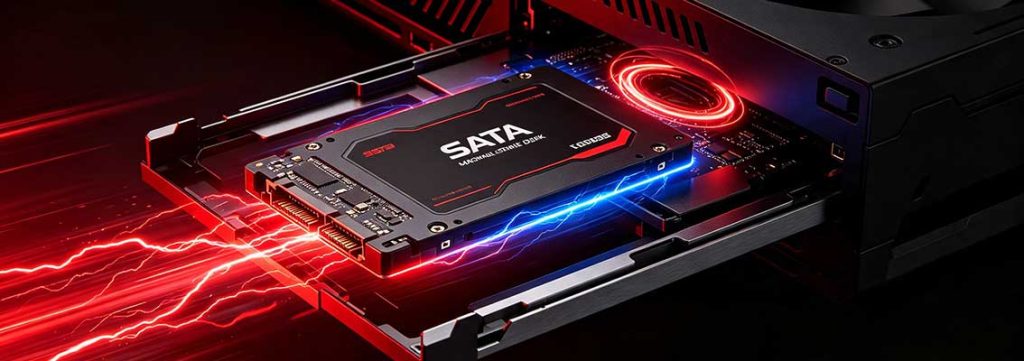
Space utilization is one of the major advantages of M.2 SATA SSD compared with traditional SATA SSD. Because an M.2 SATA SSD does not require a large external enclosure or additional cables, it occupies significantly less physical space inside a device. This compact structure allows system designers to create smaller products while maintaining reliable solid-state storage capabilities. For manufacturers developing compact computing equipment, embedded systems, and space-limited industrial devices, M.2 SATA SSD provides greater flexibility during product design.
Traditional SATA SSD requires more installation space because of its 2.5-inch housing and cable connections. Although this design offers excellent compatibility with existing systems, it may limit design flexibility in smaller devices. The additional space required for drive mounting and cable routing can affect internal layout optimization, especially in systems where every available area must be carefully allocated.
From a system integration perspective, M.2 SATA SSD simplifies hardware design by reducing mechanical components and connection requirements. However, traditional SATA SSD continues to provide advantages in upgrade-friendly systems where standard drive replacement is important. The choice between the two depends on whether the priority is compact integration or broad compatibility. Both designs serve different engineering requirements in modern storage applications.
M.2 SATA SSD Improves Space Efficiency Through Compact Storage Integration
One of the most significant advantages of M.2 SATA SSD is its ability to maximize space utilization through a compact storage design. By integrating storage components onto a small PCB and removing the traditional drive enclosure, M.2 SATA SSD occupies much less physical space compared with a standard 2.5-inch SATA SSD. This allows system manufacturers to create smaller devices while still maintaining reliable solid-state storage capability.
The compact structure of M.2 SATA SSD is especially beneficial for applications where internal space is limited. Embedded computers, industrial control systems, compact terminals, and lightweight computing platforms often require careful management of every internal component. A smaller storage form factor provides designers with more flexibility when arranging processors, cooling systems, expansion modules, and other hardware components.
In addition to saving physical space, M.2 SATA SSD can simplify system integration by reducing the number of mechanical parts required during assembly. Without separate SATA cables and drive mounting brackets, manufacturers can streamline product designs and improve internal organization. This makes M.2 SATA SSD an attractive option for modern systems that prioritize compact size, efficient integration, and simplified hardware architecture.
Traditional SATA SSD Supports Flexible Integration in Standard Hardware Platforms
Traditional SATA SSD remains widely used because it fits established hardware architectures and provides straightforward integration with existing systems. Its 2.5-inch form factor allows manufacturers and users to rely on standard drive bays, mounting brackets, and SATA connections that have been adopted across many computing platforms. This compatibility reduces design changes when upgrading systems from traditional hard drives to solid-state storage.
Although traditional SATA SSD requires more physical space than M.2 SATA SSD, the larger design can provide practical advantages in certain environments. Standardized dimensions make the drive easier to install, replace, and maintain, especially in systems where storage accessibility is important. For example, industrial computers and desktop platforms with dedicated drive compartments can continue using traditional SATA SSD without changing the overall hardware layout.
The choice between M.2 SATA SSD and traditional SATA SSD depends largely on system design priorities. M.2 SATA SSD focuses on compact integration and space efficiency, while traditional SATA SSD emphasizes compatibility and maintenance convenience. Understanding these differences allows engineers and system builders to select the storage format that best matches their product requirements.
M.2 SATA SSD and Traditional SATA SSD Have Different Application Advantages
M.2 SATA SSD and traditional SATA SSD provide different advantages depending on the application environment. M.2 SATA SSD is particularly suitable for systems that require compact storage integration, such as thin computing devices, embedded platforms, and industrial equipment with limited internal space. Its small form factor allows manufacturers to reduce product size while maintaining reliable SATA-based storage performance.
Traditional SATA SSD offers advantages in compatibility and replacement convenience. Because the 2.5 英寸 SATA SSD format has been widely adopted, it can be easily integrated into many existing systems without major hardware modifications. This makes it suitable for desktop upgrades, industrial computers with standard drive bays, and applications where easy maintenance and replacement are important factors.
The difference in application advantages does not mean that one SSD design is universally better than the other. Instead, each storage architecture is optimized for different requirements. M.2 SATA SSD focuses on compact design and efficient system integration, while traditional SATA SSD emphasizes compatibility and accessibility. Understanding the intended application scenario helps users choose the storage solution that best matches their hardware and operational needs.
M.2 SATA SSD and Traditional SATA SSD Serve Different System Design Priorities
The application differences between M.2 SATA SSD and traditional SATA SSD mainly come from their different design priorities. M.2 SATA SSD focuses on compact integration, reduced installation complexity, and efficient use of internal space. Traditional SATA SSD focuses on compatibility, easy replacement, and support for existing storage infrastructures. Neither design is universally superior because each one addresses different system requirements.
For new hardware development projects, engineers often evaluate whether the product requires a smaller storage footprint or a more standardized storage structure. Compact devices may benefit from the integration advantages of M.2 SATA SSD, while larger systems with existing SATA drive bays may continue to use traditional SATA SSD for easier deployment and maintenance.
Understanding these application differences helps manufacturers and system developers select storage solutions based on actual operating conditions rather than simply comparing specifications. The correct choice depends on factors such as product size, hardware architecture, maintenance requirements, and expected usage environment.
M.2 SATA SSD and Traditional SATA SSD Require Different Selection Considerations
Choosing between an M.2 SATA SSD and a traditional SATA SSD requires consideration of several factors, including system compatibility, installation space, maintenance requirements, and application objectives. The first step is confirming whether the target device supports an M.2 SATA interface or requires a traditional SATA connection. A storage device that does not match the system interface cannot operate correctly, regardless of its technical specifications.
For compact systems where space efficiency and simplified integration are important, an M.2 SATA SSD is often a suitable choice. Its direct motherboard connection reduces cable requirements and provides greater flexibility for manufacturers designing smaller devices. However, users must verify that the M.2 slot supports SATA protocol because some M.2 slots are designed only for PCIe NVMe SSDs.
For systems that already use standard SATA connections, traditional SATA SSD remains a practical and reliable option. It provides broad compatibility, convenient replacement, and proven performance for many computing environments. When comparing M.2 SATA SSD and traditional SATA SSD, users should focus on the actual requirements of their applications rather than selecting based only on physical size. The correct choice depends on balancing hardware compatibility, system design goals, and expected storage usage conditions.
M.2 SATA SSD and Traditional SATA SSD Require Different Performance and Cost Evaluations
Performance evaluation between M.2 SATA SSD and traditional SATA SSD should focus on actual system requirements rather than physical appearance. Since both storage formats typically operate through the SATA interface, their maximum data transfer capability is generally limited by SATA bandwidth. The main differences are related to installation design, system integration, and application suitability rather than a simple speed comparison.
From a cost perspective, traditional SATA SSD benefits from mature manufacturing processes and widespread adoption, which can make it an economical choice for many standard applications. M.2 SATA SSD may provide additional value in systems where compact design and simplified integration reduce overall product complexity. Therefore, the total system design cost should be considered rather than only comparing the storage device price.
Workload Requirements Influence the Final SSD Selection Decision
The expected workload is an important factor when selecting between M.2 SATA SSD and traditional SATA SSD. Applications involving regular data access, operating system operation, industrial control tasks, or embedded storage requirements may prioritize reliability and stable operation rather than maximum transfer speed. In these cases, the choice of SSD format should match the system environment and operational requirements.
For systems requiring frequent hardware upgrades or easy maintenance, traditional SATA SSD may provide advantages because of its standardized installation structure. For products where internal space is limited and storage integration efficiency is more important, M.2 SATA SSD may offer a better solution.
A suitable SSD selection process should therefore consider multiple factors, including interface compatibility, physical design, workload characteristics, maintenance requirements, and product development goals. By evaluating these elements together, manufacturers can select the storage architecture that provides the best balance between reliability, integration efficiency, and long-term usability.