








Selecting the right storage solution is an important decision for industrial systems because storage devices directly influence data processing efficiency, system stability, and long-term operational reliability. Among available solid-state storage technologies, SATA SSD and NVMe SSD are two widely used solutions for industrial computers, embedded systems, automation equipment, edge computing devices, and other professional applications.
Although both SATA SSD and NVMe SSD use NAND flash technology to store data, they are based on different communication protocols and hardware architectures. SATA SSDs use the SATA interface, which has been widely adopted for years and provides strong compatibility with various industrial platforms. NVMe SSDs use the PCIe interface and are designed specifically for high-speed flash storage, offering lower latency and higher data throughput.
For industrial users, choosing between SATA SSD and NVMe SSD is not simply about selecting the fastest storage device. Factors such as system architecture, workload requirements, power consumption, operating environment, and hardware compatibility must also be considered. Understanding the differences between SATA SSD and NVMe SSD helps engineers select the most suitable storage solution for specific industrial applications.
SATA SSD vs NVMe SSD Use Different Storage Interfaces in Industrial Systems
SATA SSD and NVMe SSD are based on different storage interfaces, which directly affects how they communicate with industrial systems. SATA SSDs use the Serial ATA interface, a mature storage connection originally developed for traditional hard drives. Because of its long history, SATA technology has been widely integrated into industrial computers, embedded platforms, and legacy systems that require stable and compatible storage solutions.
NVMe SSDs use the PCIe interface together with the NVMe protocol, which was designed specifically for solid-state storage devices. Unlike SATA, which was originally developed for mechanical storage devices, NVMe can communicate more efficiently with flash memory by reducing protocol limitations and improving data transfer efficiency. This allows NVMe SSDs to achieve significantly higher performance in systems that support PCIe connections.
For industrial applications, interface selection is an important consideration because storage devices must match the existing hardware architecture. Many industrial systems continue to use SATA SSDs because they provide reliable compatibility and sufficient performance for standard workloads. In contrast, systems requiring rapid data processing, real-time analysis, or high-speed data transfer may benefit from NVMe SSD solutions.
Therefore, the difference between SATA SSD and NVMe SSD interfaces is not only a technical specification but also a key factor affecting industrial system design, upgrade planning, and overall storage performance.
SATA SSD Uses Mature Interfaces for Broad Industrial Compatibility
SATA SSD uses the Serial ATA interface, which has been widely adopted in industrial computers and embedded systems for many years. This mature interface standard allows SATA SSD solutions to maintain strong compatibility with existing hardware platforms, making them suitable for industrial equipment manufacturers that require stable and predictable storage integration.
In many industrial applications, storage devices are not frequently replaced after deployment because equipment may operate continuously for several years. Therefore, compatibility and long-term availability are important considerations. SATA SSDs can be easily integrated into many industrial platforms that already support SATA connections, reducing hardware redesign requirements and simplifying system maintenance.
For industrial control systems, automation equipment, and embedded devices, the performance provided by SATA SSD is often sufficient for operating systems, application software, configuration files, and routine data storage. The combination of stable performance and wide compatibility makes SATA SSD a practical storage choice for many industrial environments.
SATA SSD Form Factors Support Flexible Industrial System Design
SATA SSD solutions are available in multiple form factors, allowing engineers to select suitable storage devices according to different system structures. Common industrial SATA SSD formats include 2.5-дюймовый SATA SSD, M.2 SATA SSD, and mSATA SSD.
The 2.5-inch SATA SSD format is commonly used in industrial computers and equipment platforms where traditional drive bays are available. M.2 SATA SSD provides a smaller footprint for compact embedded systems, while mSATA SSD is suitable for applications requiring a small form factor with SATA-based communication.
This flexibility allows industrial manufacturers to design storage configurations according to available installation space, mechanical structure, and system requirements. When upgrading or developing industrial equipment, SATA SSD form factor options provide greater design flexibility without requiring major changes to existing architectures.
NVMe SSD Uses PCIe Interfaces for High-Speed Industrial Data Processing
NVMe SSD adopts the PCIe interface and the NVMe communication protocol, which were specifically designed for flash storage technology. Compared with SATA architecture, NVMe reduces communication limitations between the storage controller and the system processor, allowing data to move more efficiently.
For industrial systems handling large amounts of data, this architecture provides advantages in response speed and processing efficiency. Applications such as machine vision, industrial automation analysis, edge computing, and real-time monitoring systems often generate large volumes of data that require fast storage access.
However, implementing NVMe SSD requires compatible hardware support, including PCIe interfaces, suitable firmware configuration, and appropriate thermal management. Therefore, NVMe SSD selection needs to consider the complete industrial system design rather than only the storage specification.
The PCIe-based architecture gives NVMe SSD strong advantages in advanced industrial applications, while SATA SSD remains competitive in systems where compatibility and stable operation are the primary requirements.
SATA SSD vs NVMe SSD Provide Different Performance for Industrial Workloads
Performance is one of the most noticeable differences between SATA SSD and NVMe SSD solutions. SATA SSDs typically operate through the SATA III interface, which provides sufficient bandwidth for many industrial applications such as automation controllers, industrial PCs, monitoring systems, and embedded devices. They offer faster performance than traditional hard drives while maintaining stable operation and broad compatibility.
NVMe SSDs provide higher performance because they use PCIe lanes to transfer data directly between the storage device and the system processor. This architecture allows NVMe SSDs to achieve higher sequential read and write speeds, lower latency, and improved input/output operations per second (IOPS). These advantages make NVMe SSDs suitable for applications involving large amounts of data processing, artificial intelligence workloads, machine vision systems, and advanced industrial computing platforms.
However, higher performance does not always mean NVMe SSD is the better choice for every industrial system. Many industrial applications do not require extremely high storage bandwidth and may prioritize reliability, compatibility, and cost efficiency. In these situations, SATA SSDs can provide sufficient performance while simplifying system integration.
The selection between SATA SSD and NVMe SSD should therefore be based on actual workload requirements. Engineers need to evaluate factors such as data volume, access frequency, application response requirements, and future system expansion plans before choosing the appropriate storage technology.
SATA SSD Provides Stable Performance for Standard Industrial Workloads
SATA SSD provides sufficient storage performance for many industrial applications where workload requirements are moderate and system stability is the primary concern. Although SATA SSD does not reach the bandwidth levels of NVMe SSD, it still delivers significantly better performance than traditional mechanical storage devices.
Industrial applications such as automation controllers, industrial PCs, equipment monitoring systems, and embedded control platforms often do not require extremely high storage throughput. Instead, they require consistent operation, predictable response, and long service life.
For these applications, SATA SSD offers a balanced solution by providing reliable read and write performance while maintaining lower system complexity. This makes SATA SSD suitable for industrial environments where data processing requirements remain relatively stable.
NVMe SSD Improves Performance for Data-Intensive Industrial Applications
NVMe SSD is designed for applications that require higher storage bandwidth and lower latency. By using PCIe communication channels, NVMe SSD can process more data simultaneously compared with SATA-based solutions.
In industrial environments, this advantage becomes important when systems need to process large datasets, high-resolution images, sensor information, or complex computing tasks. For example, machine vision inspection systems may generate continuous image data that requires fast storage access to avoid processing delays.
NVMe SSD can improve system responsiveness by reducing storage access latency and increasing data transfer efficiency. However, the actual performance benefit depends on the entire system configuration, including processor capability, memory capacity, software optimization, and workload characteristics.
Storage Performance Must Match Industrial Application Requirements
Although NVMe SSD provides higher performance capability, industrial users should not select storage devices based only on maximum speed specifications. Excessive storage performance may not provide practical benefits if the application workload does not require high data throughput.
For example, a simple industrial controller that mainly stores operating software and configuration data may not benefit significantly from NVMe SSD compared with a properly selected SATA SSD. In contrast, systems performing continuous data acquisition or real-time analysis may require NVMe SSD performance advantages.
Therefore, selecting between SATA SSD and NVMe SSD requires evaluating actual workload demands instead of choosing the highest specification available.
SATA SSD vs NVMe SSD Have Different Power Consumption Characteristics
Power consumption is an important consideration for industrial systems, especially for embedded devices, edge computing equipment, and applications where energy efficiency is critical. SATA SSD and NVMe SSD have different power characteristics because they use different communication interfaces and performance architectures.
SATA SSDs generally operate with lower performance requirements compared with NVMe SSDs, which can make them suitable for systems where power efficiency and stable operation are more important than maximum storage speed. Many industrial devices with limited power budgets use SATA SSDs because they provide reliable storage performance without requiring high-performance PCIe resources.
NVMe SSDs typically consume more power when operating at high performance levels because they utilize PCIe bandwidth and advanced controllers to achieve faster data processing. However, modern NVMe SSD designs continue to improve power efficiency through optimized controllers, firmware management, and power-saving features.
For industrial applications, power consumption must be evaluated together with performance requirements. A high-performance NVMe SSD may provide significant advantages in data-intensive environments, while a SATA SSD may be more suitable for systems requiring long-term operation with controlled energy usage.
Choosing the appropriate storage solution requires balancing performance, power consumption, thermal conditions, and application requirements rather than focusing on a single specification.
SATA SSD Provides Efficient Storage Operation for Power-Constrained Systems
SATA SSD is often selected for industrial systems where power efficiency and stable operation are important considerations. Compared with high-performance NVMe SSD solutions, SATA SSD generally operates with lower performance requirements, which can help reduce overall system power consumption in applications with limited energy budgets.
Many embedded industrial devices operate continuously for extended periods, and excessive power consumption can increase thermal management requirements and operating costs. In these environments, SATA SSD provides a practical balance between storage performance and energy efficiency.
Applications such as industrial controllers, monitoring equipment, and embedded terminals often prioritize reliability and continuous operation rather than maximum storage speed. For these systems, SATA SSD can provide sufficient data access performance while maintaining predictable power characteristics.
Selecting SATA SSD for power-sensitive industrial applications allows manufacturers to simplify system design, reduce thermal challenges, and improve long-term operational stability.
NVMe SSD Requires Thermal Management for High-Performance Operation
NVMe SSD delivers higher performance through PCIe-based data transmission, but this higher processing capability also requires careful consideration of power consumption and thermal management. During intensive workloads, NVMe SSD controllers may generate additional heat due to increased data processing activity.
For industrial systems operating in enclosed environments or high-temperature conditions, thermal control becomes an important part of storage selection. Without proper heat dissipation design, excessive temperature may affect SSD performance stability and long-term reliability.
Industrial applications using NVMe SSD often require consideration of factors such as system airflow, heat dissipation structure, operating temperature range, and workload intensity. Proper thermal management helps maintain consistent NVMe SSD performance during continuous operation.
Therefore, while NVMe SSD provides advantages in speed and responsiveness, industrial users need to evaluate whether the system design can support its performance requirements and thermal characteristics.
SATA SSD vs NVMe SSD Require Different Hardware Compatibility Considerations
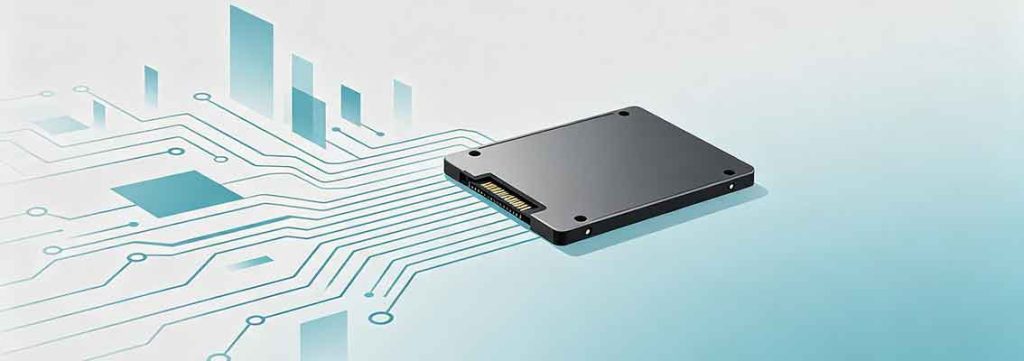
Hardware compatibility is a critical factor when selecting storage devices for industrial systems. SATA SSD and NVMe SSD require different hardware interfaces, meaning they cannot always be directly replaced without considering the system design.
SATA SSDs are available in various industrial formats, including 2.5-inch SATA SSD, M.2 SATA SSD, and mSATA SSD. These formats allow SATA storage solutions to be integrated into a wide range of industrial computers, embedded systems, and equipment platforms. Their mature interface standard makes them easier to deploy in existing systems.
NVMe SSDs require PCIe-based connections and compatible motherboard support. Industrial systems designed for NVMe storage need appropriate PCIe slots, firmware compatibility, and thermal management capabilities. Although NVMe provides higher performance, upgrading from SATA SSD to NVMe SSD may require additional hardware changes.
For manufacturers developing industrial equipment, selecting the correct SSD interface during the design stage can reduce integration challenges and improve system reliability. Engineers should evaluate available interfaces, physical dimensions, operating conditions, and future upgrade requirements before selecting SATA SSD or NVMe SSD.
Proper hardware matching ensures that the storage device can operate efficiently and deliver stable performance throughout the product lifecycle.
SATA SSD Simplifies Integration With Existing Industrial Platforms
One of the major advantages of SATA SSD is its compatibility with a wide range of existing industrial hardware platforms. Many industrial computers, embedded systems, and automation devices already include SATA interfaces, allowing SATA SSD solutions to be integrated without significant hardware modifications.
For equipment manufacturers, maintaining compatibility with existing architectures can reduce development costs and shorten product design cycles. SATA SSD allows system developers to upgrade from traditional storage devices while continuing to use established hardware structures.
This compatibility advantage is particularly valuable in industrial environments where equipment lifecycles are often longer than consumer electronics. Manufacturers may need storage solutions that remain available and compatible throughout years of product deployment.
By using SATA SSD, industrial system designers can achieve reliable storage upgrades while minimizing redesign requirements and integration risks.
NVMe SSD Requires PCIe Compatibility and System Optimization
NVMe SSD requires hardware platforms that support PCIe communication, meaning system compatibility must be evaluated before deployment. Unlike SATA SSD, NVMe cannot simply replace an existing SATA storage device without considering motherboard design, firmware support, and physical installation requirements.
Industrial equipment manufacturers adopting NVMe SSD need to verify whether the system architecture can fully utilize PCIe-based storage performance. Factors such as PCIe generation, available lanes, BIOS compatibility, and thermal design can influence actual NVMe SSD performance.
For newly developed industrial systems, NVMe SSD provides an opportunity to build higher-performance storage architectures. However, for existing equipment platforms, upgrading to NVMe SSD may require additional engineering work.
A proper compatibility evaluation ensures that the selected SSD technology can operate reliably within the complete industrial system.
SATA SSD vs NVMe SSD Suit Different Industrial Applications and Environments

Different industrial applications have different storage requirements, which means SATA SSD and NVMe SSD each have suitable application areas. The choice depends on factors such as workload intensity, system complexity, data processing requirements, and environmental conditions.
SATA SSDs are commonly used in industrial computers, automation equipment, embedded systems, and control platforms where stable storage performance and compatibility are important. Applications that mainly involve operating system storage, program execution, data logging, and standard industrial operations can often achieve reliable performance with SATA SSD solutions.
NVMe SSDs are more suitable for industrial systems that require high-speed data access and intensive processing capabilities. Examples include machine vision systems, industrial servers, edge computing platforms, AI-based inspection equipment, and systems handling large datasets. The higher bandwidth and lower latency of NVMe technology provide advantages in these demanding environments.
Environmental conditions also influence storage selection. Industrial systems may operate under temperature fluctuations, vibration, continuous workloads, or limited maintenance conditions. Therefore, SSD selection should consider not only interface and performance but also endurance, reliability, and product design suitability.
A correct SATA SSD or NVMe SSD selection helps industrial manufacturers build systems that achieve stable operation, efficient data processing, and long service life.
SATA SSD Supports Stable Storage in Industrial Control and Embedded Devices
SATA SSD is widely used in industrial applications where stable storage operation, compatibility, and reliability are key requirements. Many industrial control systems, automation equipment, and embedded devices use SATA SSD because these applications usually require consistent data storage rather than extremely high-speed data processing.
Industrial controllers often store operating systems, application programs, configuration files, and production data. These workloads typically do not require the maximum bandwidth provided by NVMe SSD but require reliable operation over long periods.
SATA SSD provides a practical storage solution for these environments by offering sufficient performance, flexible form factors, and compatibility with existing industrial platforms.
For manufacturers producing industrial equipment, SATA SSD remains an effective choice when system stability and long-term availability are more important than maximum storage performance.
NVMe SSD Meets High-Speed Data Processing Requirements in Advanced Systems
NVMe SSD is suitable for industrial applications where large amounts of data must be processed quickly. Its PCIe-based architecture allows faster communication between storage devices and system processors, making it valuable for advanced industrial computing environments.
Applications such as industrial vision inspection, artificial intelligence systems, edge computing platforms, and automated analysis equipment often require rapid data access. In these scenarios, storage performance can directly affect system response time and production efficiency.
NVMe SSD helps reduce data processing delays by providing higher throughput and lower latency. However, industrial users should also consider environmental conditions, workload patterns, and system requirements before deployment.
For advanced industrial systems, NVMe SSD provides a scalable storage solution that supports increasing data processing demands and future technology development.
SATA SSD vs NVMe SSD Selection Depends on System Requirements
Choosing between SATA SSD and NVMe SSD requires a comprehensive evaluation of system requirements rather than simply comparing performance specifications. Industrial users need to consider application workload, hardware platform, power limitations, environmental conditions, and expected service life when selecting storage solutions.
SATA SSD remains a reliable choice for many industrial applications because of its compatibility, stability, and sufficient performance for standard workloads. It is especially suitable for systems that require dependable storage operation without the need for extremely high data transfer speeds.
NVMe SSD provides advantages in applications that require faster response times, higher bandwidth, and intensive data processing capabilities. For advanced industrial systems, edge computing platforms, and data-driven applications, NVMe technology can provide improved storage performance and support future system development.
As a professional storage solution provider, Indilinx offers various SSD products designed for different industrial and embedded applications, including 2.5″ SATA SSD, M.2 SATA SSD, mSATA SSD, and PCIe NVMe SSD solutions. By providing different storage interfaces and form factors, Indilinx helps customers select suitable SSD technologies based on specific system requirements.
The best storage solution is not determined by SATA SSD or NVMe SSD alone but by how well the device matches the complete industrial system. Through proper evaluation of performance, compatibility, reliability, and application needs, manufacturers can achieve more stable and efficient storage performance for long-term operation.
Industrial SSD Selection Requires Balancing Performance and Reliability
Selecting between SATA SSD and NVMe SSD requires a comprehensive evaluation of industrial system requirements. Performance is an important factor, but it is only one part of the overall storage selection process.
Industrial users must also consider reliability, compatibility, power consumption, environmental conditions, operating temperature, and expected service life. A storage solution that provides suitable performance while maintaining stable operation is often more valuable than a device with excessive specifications.
For example, industrial control systems may benefit more from SATA SSD compatibility and stability, while data-intensive systems may require NVMe SSD performance advantages. The correct choice depends on the actual application scenario.A professional SSD selection process helps manufacturers avoid unnecessary costs and ensures that storage devices can support reliable system operation throughout the equipment lifecycle.