







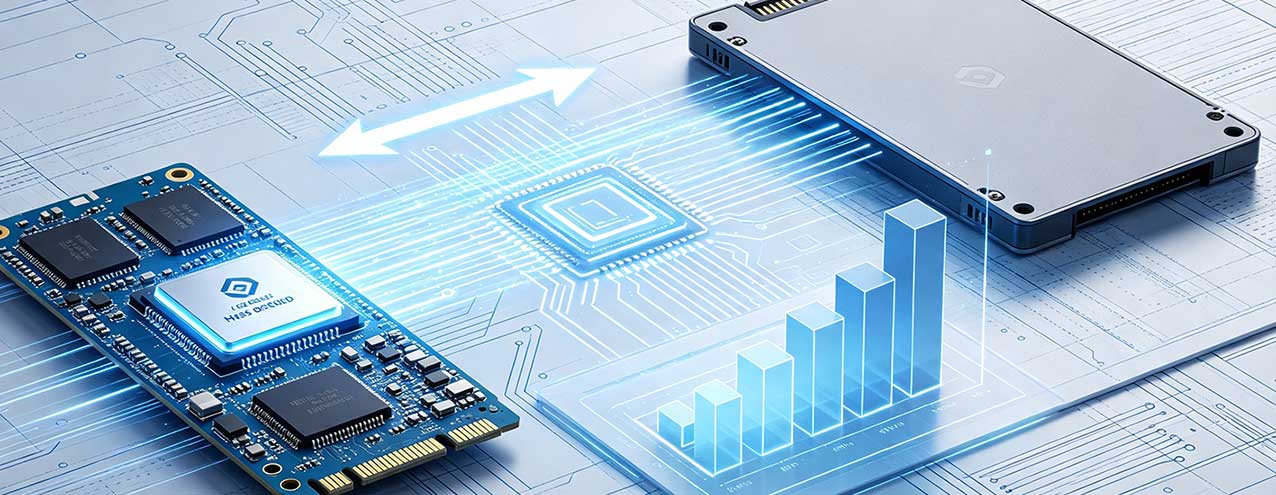
Solid state drives (SSDs) are widely used in computers, industrial systems, embedded devices, and storage platforms because of their high speed, low latency, and better durability compared with traditional hard disk drives. However, SSD products are not built with identical internal architectures. One of the most important differences between SSD designs is whether the drive includes dedicated DRAM cache. DRAM SSD and DRAM-less SSD use different approaches to manage data mapping and NAND flash access, which directly affects their performance behavior, power characteristics, cost structure, and suitable application scenarios.
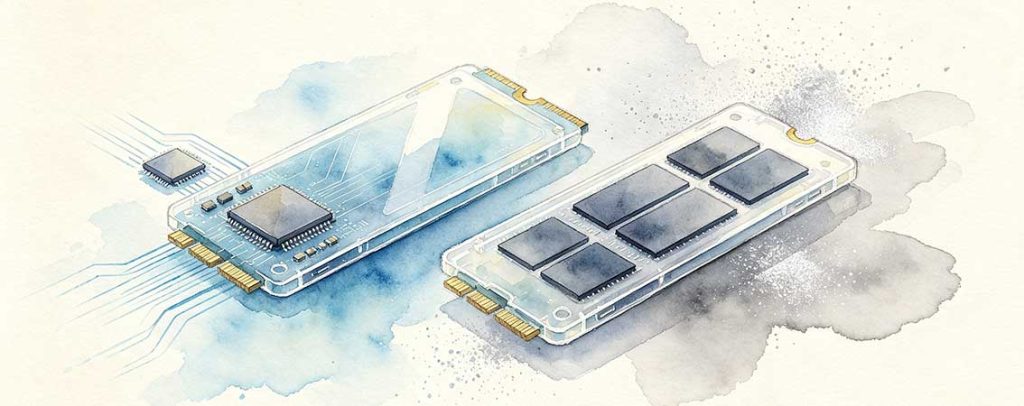
A DRAM SSD integrates dedicated DRAM memory inside the storage device to temporarily store frequently accessed mapping information between logical addresses and physical NAND locations. This architecture allows the SSD controller to quickly access the Flash Translation Layer (FTL), improving data management efficiency. In contrast, a DRAM-less SSD removes the external DRAM component and relies on alternative technologies such as Host Memory Buffer (HMB) or optimized controller algorithms to handle data mapping. Although both solutions use NAND flash memory as the primary storage medium, their internal designs create noticeable differences during real-world operation.
Understanding the differences between DRAM SSD and DRAM-less SSD helps users select appropriate storage solutions according to workload requirements and system conditions. DRAM SSDs are generally designed for applications that require stronger performance consistency and intensive data processing capability, while DRAM-less SSDs focus on reducing hardware complexity, power consumption, and overall cost. The choice between these two SSD architectures depends on factors such as workload intensity, application environment, endurance requirements, and budget considerations.
DRAM SSD and DRAM-less SSD Differ in Cache Memory Architecture
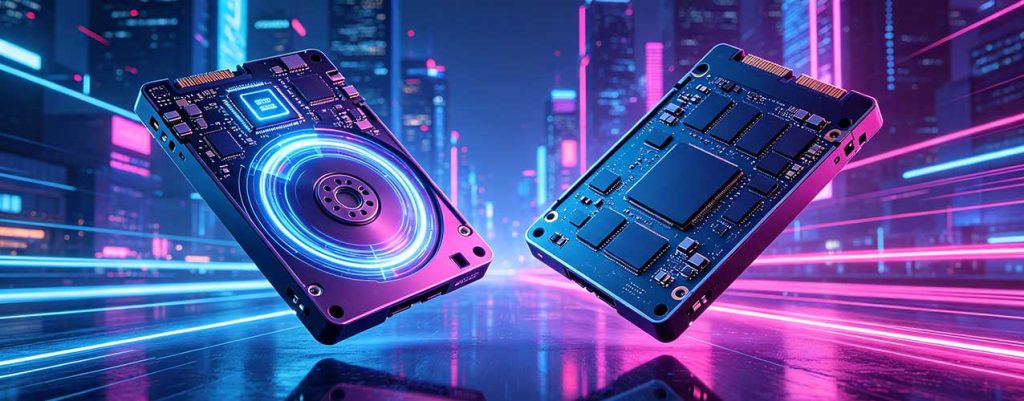
The fundamental difference between DRAM SSD and DRAM-less SSD is the way they manage cache memory and data mapping information. A DRAM SSD includes a dedicated DRAM chip that stores the Flash Translation Layer (FTL) mapping table. The FTL is responsible for translating logical addresses from the operating system into physical locations inside NAND flash memory. Because DRAM provides much faster access speed than NAND flash, the SSD controller can retrieve mapping information more efficiently, reducing the time required for data location management during read and write operations.
A DRAM-less SSD does not include dedicated DRAM memory, which means the controller must use other methods to manage the FTL information. Some DRAM-less SSDs utilize Host Memory Buffer technology, allowing the SSD controller to temporarily access a small amount of system memory through the PCIe interface. Other designs depend more heavily on controller firmware optimization and internal memory management strategies. This simplified architecture reduces component requirements but also limits the available cache resources compared with DRAM-based designs.
The difference in cache architecture affects how each SSD handles complex workloads. DRAM SSDs usually have an advantage when processing frequent random data requests because the controller can quickly access mapping information stored in DRAM. DRAM-less SSDs can still provide reliable performance for many everyday applications, but their behavior may vary more under heavier workloads due to limited cache availability. Therefore, cache architecture is one of the key factors that determines the performance characteristics of different SSD designs.
DRAM SSD Uses Dedicated Cache Memory to Improve Data Mapping Efficiency
The main architectural difference between DRAM SSD and DRAM-less SSD is whether the drive includes dedicated DRAM memory for cache management. In a DRAM SSD, the built-in DRAM chip is used to store frequently accessed metadata, especially the mapping information managed by the Flash Translation Layer (FTL). Since NAND flash cannot directly understand logical addresses from the host system, the SSD controller needs to maintain a mapping relationship between logical block addresses and physical NAND locations. The dedicated DRAM cache allows the controller to access this mapping information more quickly, reducing the time required to locate stored data.
The presence of DRAM improves the efficiency of internal data management because the SSD controller does not need to repeatedly search NAND flash memory for mapping information. This reduces additional read operations and helps optimize communication between the controller and NAND chips. As a result, DRAM SSDs usually achieve better responsiveness when handling frequent small data requests, random read and write operations, and complex workloads that require continuous address translation.
For applications that require stable storage performance, the cache architecture of a DRAM SSD provides important advantages. The dedicated DRAM component allows the controller to manage data placement, garbage collection, and wear leveling more efficiently. Although the additional memory increases manufacturing complexity and cost, it improves the internal organization of storage operations and helps maintain more consistent performance during demanding usage scenarios.
DRAM Cache Stores FTL Mapping Information for Faster Data Access
The FTL mapping table is a critical component that determines how efficiently an SSD manages data access. In a DRAM SSD, this mapping information can be temporarily stored in the dedicated DRAM cache instead of being repeatedly retrieved from NAND flash. Because DRAM provides much faster access speed than NAND storage, the SSD controller can quickly identify the physical location of requested data and complete read or write operations more efficiently.
This architecture reduces the additional latency caused by searching for address translation information. When a host system requests data, the SSD controller can directly refer to the mapping information stored in DRAM and determine where the corresponding data blocks are located. This process improves response speed, especially when the workload involves many small files, frequent data updates, or random access patterns.
The use of DRAM cache also helps improve internal SSD management functions. Operations such as garbage collection and wear leveling require the controller to continuously monitor NAND block status and reorganize stored data. With faster access to mapping information, a DRAM SSD can perform these background processes more efficiently, helping maintain stable performance and extending NAND flash endurance under continuous operation.
DRAM SSD and DRAM-less SSD Have Different Read and Write Performance
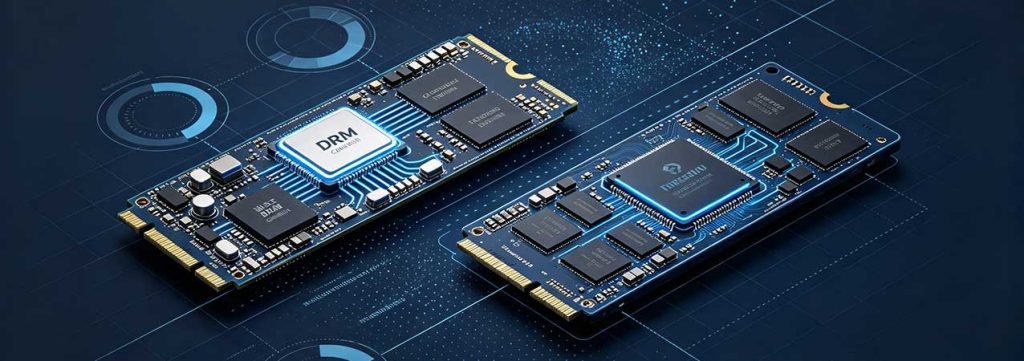
The difference in read and write performance between DRAM SSD and DRAM-less SSD is mainly caused by their different approaches to data management. Although both types of SSDs use NAND flash memory as the primary storage medium, different SSD architectures such as PCIe NVMe SSD designs influence how controllers manage data access and storage efficiency. The way they handle address mapping, data buffering, and internal operations affects their actual performance under different workloads. A DRAM SSD uses dedicated DRAM memory to improve access to frequently used mapping information, while a DRAM-less SSD relies on optimized controller algorithms, firmware management, and technologies such as Host Memory Buffer (HMB) to reduce the impact of missing internal cache memory.
In general, DRAM SSDs have advantages in workloads involving frequent random data access because the controller can quickly obtain address translation information from the DRAM cache. This reduces additional operations during read and write processes and allows the SSD to respond faster when handling multiple small data requests. DRAM-less SSDs can still provide competitive sequential read and write speeds, especially when processing large continuous files, but their performance differences may become more noticeable when workloads involve intensive random operations or frequent data changes.
Therefore, comparing DRAM SSD and DRAM-less SSD performance requires more than looking at manufacturer specifications such as maximum sequential read speed. Real-world performance depends on workload patterns, data access frequency, SSD controller design, NAND flash type, and system requirements. Understanding how different architectures affect read and write behavior helps users select the appropriate SSD solution for their specific application.
DRAM SSD Provides Faster Random Access Performance Through Efficient Data Management
DRAM SSDs generally provide better random read and write performance because the dedicated DRAM cache allows the SSD controller to manage data location information more efficiently. In SSD architecture, the controller must continuously translate logical addresses from the host system into physical locations inside NAND flash memory. When this mapping information is stored in dedicated DRAM, the controller can access it with lower latency, which improves response speed during frequent small data operations.
Random workloads are common in many computing environments, including operating systems, databases, professional software applications, and industrial control systems. These workloads usually involve accessing many small files or modifying data blocks repeatedly rather than transferring one large continuous file. Under these conditions, the efficiency of internal data management becomes especially important. A DRAM SSD can reduce unnecessary NAND access operations and allow the controller to process requests more smoothly.
Another advantage of DRAM SSD architecture is that the additional cache space supports more efficient background operations. Functions such as garbage collection, wear leveling, and data organization require the controller to frequently update information about NAND usage. With dedicated DRAM resources, these processes can be handled more effectively, helping maintain faster response times and reducing performance fluctuations during complex workloads.
For users who require consistent responsiveness, the read and write advantages of DRAM SSDs become more significant. Although DRAM SSDs typically involve higher costs due to additional components, their improved data management capability makes them suitable for applications where storage performance and operational stability are more important than minimizing initial hardware expenses.
DRAM-less SSD Shows Different Performance Behavior Under Various Workloads
DRAM-less SSDs achieve storage performance through a different design approach. Without dedicated DRAM memory, the SSD controller must use alternative methods to manage mapping information and optimize data access. Modern DRAM-less SSDs rely on improved firmware algorithms, controller processing capability, and NAND management techniques to maintain acceptable performance while reducing hardware complexity.
The performance difference between DRAM SSD and DRAM-less SSD is not always visible in every application. For example, when handling sequential data transfers such as copying large video files or loading large datasets, a DRAM-less SSD may achieve competitive speeds because the workload requires fewer random address translation operations. In these situations, the limitations caused by the absence of dedicated DRAM may have less impact on overall transfer performance.
However, when workloads become more complex, performance behavior can change. Frequent small file operations, multitasking environments, or long-duration write activities may create greater demands on the SSD controller. Since a DRAM-less SSD has fewer internal cache resources, the controller may require additional processing steps to manage data placement and address translation. This can result in higher latency or greater performance variation compared with a DRAM SSD under demanding conditions.
The suitability of a DRAM-less SSD depends on the intended application rather than simply its benchmark results. For cost-sensitive systems, lightweight computing devices, and applications with moderate storage activity, DRAM-less SSDs can provide an effective balance between performance and affordability. However, users requiring consistently high storage responsiveness should evaluate whether the workload characteristics justify choosing a DRAM-based architecture.
DRAM SSD and DRAM-less SSD Show Different Performance Stability Under Heavy Workloads
Performance stability under heavy workloads is another important difference between DRAM SSD and DRAM-less SSD. While both SSD architectures can provide fast storage performance during normal operation, their behavior may change when handling continuous data processing, long-duration write tasks, or intensive input and output requests. Heavy workloads place greater demands on the SSD controller because it must manage data placement, garbage collection, wear leveling, and NAND flash operations while maintaining consistent response speed.
A DRAM SSD generally has an advantage in sustained workloads because its dedicated DRAM cache provides additional space for storing frequently accessed management information. This allows the SSD controller to process storage operations more efficiently and reduces the need to repeatedly access NAND flash for address translation. As workload intensity increases, this architectural advantage helps the SSD maintain more stable performance and reduce sudden speed fluctuations.
A DRAM-less SSD can also provide reliable performance under many practical conditions, especially when optimized controllers and firmware are used. However, because it lacks dedicated DRAM resources, the controller has fewer cache capabilities when managing complex storage operations. During extended write workloads or environments with frequent data changes, performance may become more dependent on firmware efficiency, NAND characteristics, and workload patterns.
Understanding the difference in heavy workload behavior helps users select the appropriate SSD architecture. Applications requiring consistent performance over long periods, such as professional computing systems, enterprise platforms, and high-demand storage environments, may benefit from DRAM SSD designs. Meanwhile, DRAM-less SSDs can remain a suitable option for systems where workload intensity is moderate and cost or power efficiency is a higher priority.
DRAM SSD Maintains More Consistent Performance During Continuous Operations
A DRAM SSD can maintain more consistent performance during continuous operations because its dedicated DRAM cache improves the efficiency of internal data management. When an SSD receives a large number of read and write requests over an extended period, the controller must constantly update mapping information, organize NAND flash data, and perform background maintenance operations. The additional DRAM memory provides faster access to important management information, allowing these processes to run more smoothly.
During sustained workloads, SSD performance is affected not only by the initial data transfer speed but also by how efficiently the drive handles ongoing operations after the cache becomes heavily utilized. A DRAM SSD can reduce some of the processing pressure on the controller by keeping frequently accessed metadata readily available. This helps minimize delays caused by repeated address translation and improves the consistency of storage responses.
For example, applications involving continuous data recording, frequent file modifications, or large-scale data processing may require storage devices to maintain stable output for long periods. In these scenarios, a DRAM SSD can provide more predictable performance because the controller has additional resources to manage complex NAND operations. This stability is especially valuable in systems where performance interruptions may affect workflow efficiency or system reliability.
The advantage of DRAM SSD architecture is therefore not only higher peak performance but also stronger performance consistency under demanding conditions. By improving internal data management efficiency, dedicated DRAM helps the SSD maintain smoother operation during long-term workloads and reduces the possibility of significant performance degradation caused by storage pressure.
Dedicated DRAM Reduces Controller Workload During Intensive Data Processing
The dedicated DRAM component in a DRAM SSD plays an important role in reducing the workload placed on the SSD controller during intensive data processing. The controller is responsible for managing communication between the host system and NAND flash memory, including address translation, error correction, garbage collection, and wear leveling. When mapping information can be accessed quickly through DRAM cache, the controller can complete these tasks more efficiently.
Without sufficient cache resources, the controller may need to perform additional operations to locate and manage data stored in NAND flash. During heavy workloads, these additional operations can increase processing pressure and contribute to higher latency. DRAM SSD architecture reduces this burden by allowing frequently used metadata to remain available in faster memory, improving the efficiency of storage management.
This advantage becomes more noticeable in environments where storage activity is continuous and unpredictable. For example, servers, industrial computers, and professional workstations may experience frequent data updates and simultaneous access requests. In such cases, reducing controller workload helps maintain stable response times and prevents performance from fluctuating significantly during operation.
Therefore, dedicated DRAM is not simply an additional memory component added to increase specifications. It plays a functional role in improving SSD internal coordination and allowing the controller to manage complex workloads more effectively. This is one of the main reasons why DRAM SSDs often provide better sustained performance stability compared with DRAM-less SSDs in demanding applications.
DRAM-less SSD Experiences Different Performance Changes Under Sustained Workloads
A DRAM-less SSD uses a simplified storage architecture that removes dedicated DRAM memory, which changes how the drive manages sustained workloads. During normal operations, modern DRAM-less SSDs can provide sufficient performance through optimized controllers, firmware algorithms, and NAND management technologies. However, when the workload becomes more intensive and continues for a longer period, the absence of dedicated DRAM may influence how efficiently the SSD handles internal operations.
One of the main challenges during sustained workloads is maintaining efficient data organization while the NAND flash memory undergoes continuous read and write cycles. The SSD controller must manage tasks such as garbage collection and block allocation while also responding to host requests. Because DRAM-less SSDs have fewer cache resources, the controller may need to spend more processing effort managing these operations, which can affect performance consistency in certain scenarios.
The impact of this architectural difference depends heavily on the application environment. For workloads involving occasional file transfers, general computing tasks, or moderate data access requirements, a DRAM-less SSD may provide sufficient stability and efficiency. However, applications with continuous writing, frequent data updates, or high input/output demand may experience greater performance variation compared with a DRAM SSD.
When selecting between DRAM SSD and DRAM-less SSD, users should evaluate not only initial benchmark results but also expected workload duration and intensity. A DRAM-less SSD can be an effective storage solution for applications that prioritize cost and efficiency, while DRAM SSDs may provide stronger advantages where long-term performance stability is a critical requirement.
DRAM SSD and DRAM-less SSD Have Different Power Consumption and Design Characteristics
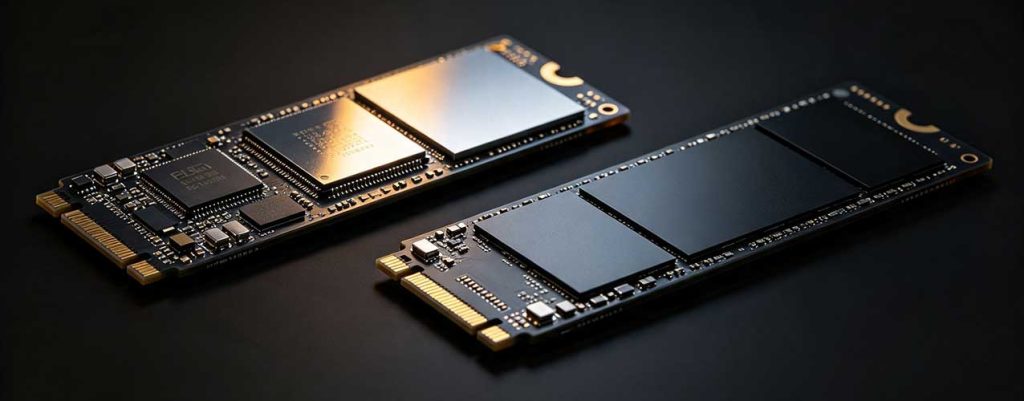
Power consumption and hardware design are important differences between DRAM SSD and DRAM-less SSD architectures. Although both types of solid state drives use NAND flash memory as the primary storage medium, the additional DRAM component in a DRAM SSD changes the internal structure, power requirements, and overall design complexity of the drive. Understanding these differences helps users evaluate which SSD architecture is more suitable for specific applications, especially in systems where energy efficiency, thermal management, and hardware limitations are important considerations.
A DRAM SSD includes dedicated DRAM memory that works with the SSD controller to improve data management efficiency. However, adding an additional memory chip also increases the number of components on the circuit board and introduces additional power consumption during operation. This additional hardware may require more careful thermal management, especially in compact devices or systems with strict power limitations. Therefore, DRAM SSD designs often focus on balancing performance advantages with energy and thermal requirements.
A DRAM-less SSD removes the dedicated DRAM component and uses alternative technologies, such as Host Memory Buffer (HMB) in compatible systems, to reduce hardware complexity. This simplified design can help lower power consumption, reduce manufacturing complexity, and provide greater flexibility for compact storage devices. However, the reduction in hardware resources may influence how the SSD controller manages internal operations under demanding workloads.
The differences in power consumption and design characteristics do not mean that one architecture is always better than the other. Instead, the suitable choice depends on the application environment, system requirements, workload intensity, and design priorities. DRAM SSDs are often selected when higher performance consistency is required, while DRAM-less SSDs can provide advantages in lightweight systems where efficiency, size, and cost control are more important.
DRAM SSD Uses Additional Memory Components to Improve Storage Management Efficiency
A DRAM SSD contains a dedicated DRAM chip that works as a high-speed memory area for storing frequently accessed SSD management information. This additional component increases the complexity of the storage architecture but also improves the efficiency of communication between the SSD controller and NAND flash memory. By providing faster access to mapping information and other internal data structures, DRAM helps the controller manage storage operations more effectively.
The inclusion of DRAM affects the physical design of the SSD because manufacturers need to allocate additional space on the PCB for the memory component and related circuits. Compared with a DRAM-less SSD, a DRAM SSD generally requires more hardware resources during production and may have higher component costs. In compact devices where space and power budgets are limited, these design factors need to be considered carefully.
However, the additional hardware also provides functional advantages. The dedicated DRAM allows the SSD controller to access important management information more quickly, which can improve internal operation efficiency. This design is particularly valuable for applications that require frequent data access, intensive storage operations, or consistent performance over extended periods.
For users evaluating different SSD solutions, the design complexity of a DRAM SSD should be considered together with its performance benefits. The additional memory component increases hardware requirements, but it also provides stronger support for efficient storage management and more stable operation in demanding environments.
DRAM-less SSD Simplifies Hardware Design Through Reduced Component Requirements
A DRAM-less SSD adopts a simpler hardware structure by eliminating the dedicated DRAM chip used in traditional SSD designs. Instead of relying on separate cache memory, the SSD controller manages NAND flash operations through optimized firmware algorithms and, in some cases, Host Memory Buffer technology that allows compatible systems to provide a small amount of system memory for storage management tasks.
The simplified architecture reduces the number of components required on the SSD circuit board. This allows manufacturers to design more compact storage devices with lower material costs and potentially lower power consumption. For applications such as consumer laptops, embedded systems, and devices with limited power availability, this design approach provides greater flexibility.
Although the absence of dedicated DRAM reduces hardware complexity, it also changes how the SSD controller handles internal operations. The controller may need to manage storage tasks with fewer dedicated memory resources, which means firmware optimization becomes especially important. The final performance and efficiency of a DRAM-less SSD depend heavily on controller design, NAND quality, and workload characteristics.
The simplified design of a DRAM-less SSD provides practical advantages for many applications. By reducing component requirements, manufacturers can create efficient storage solutions that balance performance, power consumption, and cost. This makes DRAM-less architecture an important option for systems where compact design and energy efficiency are key priorities.
Simplified Architecture Helps Reduce Power Consumption and Product Complexity
The simplified hardware structure of a DRAM-less SSD contributes to lower power requirements by removing the additional energy demand associated with dedicated DRAM operation. Since the drive does not need to continuously power a separate memory component, it can reduce overall energy consumption during certain operating conditions. This characteristic is especially beneficial for battery-powered devices where storage efficiency directly affects system endurance.
In addition to power advantages, fewer hardware components can simplify the manufacturing process and reduce potential points of failure. A simpler PCB layout may provide greater design flexibility for compact storage products, including smaller form factors and devices with limited internal space. These characteristics make DRAM-less SSDs suitable for applications where size, efficiency, and cost control are major design considerations.
However, power efficiency should always be evaluated together with workload requirements. While a DRAM-less SSD may provide excellent efficiency in moderate-use environments, applications requiring continuous high-performance storage may benefit from the additional resources provided by DRAM SSD architecture. The selection between the two designs should therefore consider the balance between energy consumption and required storage performance.
By offering a simpler and more efficient hardware structure, DRAM-less SSD technology provides manufacturers and system designers with another option for optimizing storage solutions. Its reduced complexity makes it particularly suitable for lightweight computing systems, embedded applications, and products that prioritize efficient resource utilization.
DRAM SSD and DRAM-less SSD Differ in Cost and Application Scenarios
The cost difference between DRAM SSD and DRAM-less SSD mainly comes from their different hardware structures, component requirements, and performance capabilities. Although both SSD architectures provide non-volatile storage based on NAND flash memory, the additional DRAM component in a DRAM SSD increases manufacturing costs and design complexity. In contrast, DRAM-less SSDs remove the dedicated DRAM chip and adopt a simpler architecture, allowing manufacturers to reduce component costs while maintaining the basic advantages of solid-state storage technology.
A DRAM SSD is usually positioned for applications where storage performance, responsiveness, and operational consistency are more important than the lowest purchase cost. The additional DRAM memory improves internal data management efficiency and provides advantages in environments with frequent data access, complex workloads, or long operating cycles. Therefore, users are often willing to pay a higher price for DRAM SSDs when storage performance has a direct impact on system efficiency and productivity.
A DRAM-less SSD focuses more on achieving a balance between storage performance and cost efficiency. By reducing hardware components, manufacturers can provide more affordable SSD solutions for systems with moderate storage requirements. These SSDs are widely used in applications where workloads are less intensive and where reducing system cost, power consumption, or hardware complexity is a priority.
The choice between DRAM SSD and DRAM-less SSD should therefore be based on actual application requirements rather than simply comparing prices. A lower-cost SSD may not always provide the best value if the system requires stable performance under demanding conditions. Likewise, a DRAM SSD may represent unnecessary expense for applications that do not require advanced storage capabilities. Understanding the relationship between architecture, cost, and usage scenarios helps users select a suitable SSD solution.
DRAM SSD Provides Higher Value for Performance-Oriented Applications
DRAM SSDs provide higher value in applications where storage performance and consistency are critical factors. The dedicated DRAM cache allows the SSD controller to manage data mapping and internal operations more efficiently, which helps improve responsiveness when handling frequent data access requests. Although the additional memory component increases the overall product cost, the performance benefits can justify the investment in systems that depend on reliable storage operation.
Applications such as professional workstations, enterprise computing platforms, industrial computers, and high-performance embedded systems often require storage devices to handle continuous workloads and complex data processing. In these environments, storage performance is not only determined by maximum read and write speed but also by how consistently the SSD responds during long-term operation. A DRAM SSD can provide advantages by supporting smoother data management and reducing performance fluctuations caused by intensive storage activity.
For system designers and equipment manufacturers, choosing a DRAM SSD can improve the overall value of the final product when storage reliability and user experience are important. For example, systems that frequently load operating software, process large amounts of data, or perform repeated read and write operations may benefit from the additional capabilities provided by DRAM architecture.
However, selecting a DRAM SSD should still be based on workload analysis. Not every application requires dedicated DRAM, and the additional cost may not provide meaningful benefits in lightweight systems. The value of DRAM SSD technology depends on whether the application can take advantage of its improved storage management efficiency and performance stability.
Industrial and Professional Systems Benefit From DRAM-Based Storage Architecture
Industrial and professional systems often have stricter requirements for storage performance compared with general consumer devices. These systems may operate continuously for long periods, process large amounts of operational data, or require stable response times to maintain overall equipment efficiency. In such environments, the architecture of the SSD can directly influence system reliability and operational performance.
A DRAM SSD can provide advantages in these applications because the dedicated cache memory improves the efficiency of internal storage management. Industrial computers, automation equipment, and professional systems may experience frequent data logging, software execution, database access, or repeated file updates. These workloads require the SSD controller to process many storage operations efficiently, making the additional DRAM resources valuable.
Compared with selecting the lowest-cost storage device, using a DRAM SSD in performance-sensitive applications can help reduce potential limitations caused by unstable storage behavior. The higher initial investment may be offset by improved system responsiveness, better workload handling capability, and more predictable operation throughout the product lifecycle.
For manufacturers developing industrial or professional equipment, evaluating SSD architecture during product design is essential. The correct choice between DRAM SSD and DRAM-less SSD depends on the expected workload, operating environment, and required service life. A DRAM-based storage solution can provide stronger support when consistent performance is a key requirement.
DRAM-less SSD Offers Cost Advantages for General Storage Requirements
DRAM-less SSDs provide cost advantages by simplifying the internal storage architecture and reducing the number of required components. Without dedicated DRAM memory, manufacturers can lower material costs and create more economical SSD products while still benefiting from the speed, durability, and shock resistance advantages of solid-state storage compared with traditional hard disk drives.
For applications with moderate storage workloads, the performance difference between DRAM SSD and DRAM-less SSD may not significantly affect daily operation. Systems that mainly handle basic file storage, web browsing, office applications, lightweight computing tasks, or occasional data transfers may not require the additional cache capability provided by DRAM architecture.
The simplified design of DRAM-less SSDs also allows manufacturers to develop more compact and energy-efficient storage solutions. This makes them suitable for devices where cost control and hardware efficiency are important considerations. For example, consumer electronics, entry-level computing systems, and embedded devices often prioritize overall system affordability rather than maximum storage performance.
However, users should evaluate workload requirements before selecting a DRAM-less SSD only because of its lower price. If the storage device will be exposed to frequent data processing, intensive multitasking, or continuous write operations, the performance limitations of a simplified architecture may become more noticeable. The best choice depends on whether cost savings or storage performance is the primary priority.
DRAM SSD and DRAM-less SSD Provide Different Long-Term Reliability Performance
Long-term reliability is an important factor when selecting between DRAM SSD and DRAM-less SSD, especially for systems that require continuous operation and stable storage performance throughout their service life. Although both SSD architectures use NAND flash memory and rely on similar fundamental technologies, their internal designs influence how they manage data organization, memory wear, and background storage operations over time. Understanding these differences helps users evaluate which SSD architecture is more suitable for applications with different reliability requirements.
A DRAM SSD can provide advantages in long-term operation because the dedicated DRAM component improves the efficiency of internal data management. Storage products such as 2.5″ SATA SSD (S325X) are designed to provide reliable solid-state storage performance for various computing environments. The SSD controller can access frequently used mapping information more efficiently, which helps optimize NAND flash management processes such as garbage collection and wear leveling. By reducing unnecessary NAND access operations, a DRAM SSD can support smoother operation and help maintain more consistent storage behavior during extended usage periods.
A DRAM-less SSD achieves reliability through a simplified architecture combined with controller optimization, firmware algorithms, and NAND management technologies. Without dedicated DRAM, the SSD relies more heavily on efficient firmware design to manage internal operations. Modern DRAM-less SSDs can provide reliable performance for many applications, but their long-term behavior may depend more on the quality of controller algorithms, NAND flash selection, and workload characteristics.
The reliability difference between DRAM SSD and DRAM-less SSD is therefore related to architecture and application requirements rather than a simple comparison of good or bad. Different solid-state storage solutions can provide different balances between performance, endurance, and cost. Systems that require long service cycles, frequent data updates, and predictable storage behavior may benefit from DRAM SSD designs. Applications with moderate workloads and stronger cost constraints may find DRAM-less SSDs to be a suitable solution. Selecting the correct SSD architecture based on operating conditions is essential for achieving reliable long-term storage performance.
DRAM SSD Supports Stable Long-Term Operation Through Efficient Data Management
A DRAM SSD supports long-term reliability by improving the efficiency of internal data management processes. During the lifespan of an SSD, the controller continuously performs important operations such as logical-to-physical address mapping, garbage collection, error correction, and wear leveling to maintain NAND flash performance and durability. The dedicated DRAM in a DRAM SSD provides faster access to frequently used management information, allowing these processes to operate more efficiently.
Efficient data management is important because NAND flash memory has a limited number of program and erase cycles. The SSD controller must distribute data writes evenly across memory cells to prevent excessive wear on specific areas. A DRAM SSD can assist this process by reducing delays in accessing mapping information, allowing the controller to organize data placement more effectively and maintain balanced NAND usage over time.
In applications involving continuous data recording, frequent file updates, or long operating hours, storage reliability depends not only on the endurance rating of NAND flash but also on how effectively the SSD manages internal operations. A well-designed DRAM SSD can provide more predictable behavior because its architecture offers additional resources for handling complex storage tasks.
For industrial systems, professional workstations, and other environments where downtime may affect productivity, long-term reliability is often a higher priority than initial purchase cost. By supporting more efficient storage management, DRAM SSD architecture helps maintain stable operation and provides stronger reliability potential throughout the product lifecycle.
DRAM-less SSD Relies on Controller and Firmware Optimization for Reliability
A DRAM-less SSD achieves reliability through efficient controller design and optimized firmware rather than relying on dedicated DRAM memory. Since the architecture removes the separate cache component, the SSD controller must manage NAND flash operations with fewer hardware resources. As a result, firmware quality becomes a more important factor in determining how effectively the SSD handles data organization, error management, and long-term operation.
Modern DRAM-less SSD controllers are designed with advanced algorithms to improve storage efficiency. Functions such as garbage collection, wear leveling, bad block management, and error correction help maintain NAND flash reliability during regular use. In compatible systems, technologies such as Host Memory Buffer can also provide additional support by allowing the SSD to use a small amount of system memory for certain management functions.
The long-term reliability of a DRAM-less SSD depends greatly on how well these technologies are implemented. A carefully optimized controller and high-quality NAND flash can enable DRAM-less SSDs to provide reliable operation in many applications. However, workloads involving frequent data changes, heavy writing, or extended continuous operation may place greater demands on controller efficiency.
Therefore, when evaluating DRAM-less SSD reliability, users should consider more than the absence of dedicated DRAM. Factors such as controller architecture, firmware optimization, NAND quality, endurance specifications, and expected workload conditions all influence the final reliability performance. A properly designed DRAM-less SSD can provide effective storage reliability when matched with an appropriate application environment.
Firmware Quality and NAND Management Affect DRAM-less SSD Reliability
Firmware quality plays a critical role in determining the reliability performance of a DRAM-less SSD because the controller must perform more storage management tasks without dedicated DRAM support. The firmware controls how the SSD handles data placement, memory allocation, background operations, and error management. Efficient firmware design helps the controller maximize available resources and maintain stable NAND flash operation.
NAND management technologies are also essential for extending SSD service life. Since NAND cells gradually wear with repeated write and erase cycles, the SSD must use techniques such as wear leveling to distribute data evenly across memory blocks. Effective garbage collection and error correction mechanisms further help maintain data integrity and reduce performance degradation over time.
For DRAM-less SSDs, the combination of controller capability, firmware algorithms, and NAND quality determines whether the simplified architecture can meet reliability requirements. A well-optimized design can provide dependable operation for many mainstream applications, while poorly matched components may result in reduced efficiency or shorter service life under demanding workloads.
When selecting between DRAM SSD and DRAM-less SSD, users should evaluate the complete storage solution rather than focusing only on whether the drive includes DRAM. Reliability depends on the interaction between hardware architecture, controller technology, firmware optimization, and application conditions. Understanding these factors allows users to choose an SSD that provides suitable long-term performance and durability.
DRAM SSD and DRAM-less SSD Require Different Selection Criteria
Selecting between DRAM SSD and DRAM-less SSD requires a clear understanding of application requirements, workload characteristics, system limitations, and expected storage performance. Although both SSD architectures provide faster access speed, lower latency, and better durability than traditional hard disk drives, their internal designs are based on advanced NAND-флеш-память technology, making them suitable for different usage environments. Choosing the correct SSD architecture is not simply a matter of selecting the higher-performance option or the lower-cost option, but rather finding the right balance between performance requirements, system design goals, and long-term operating conditions.
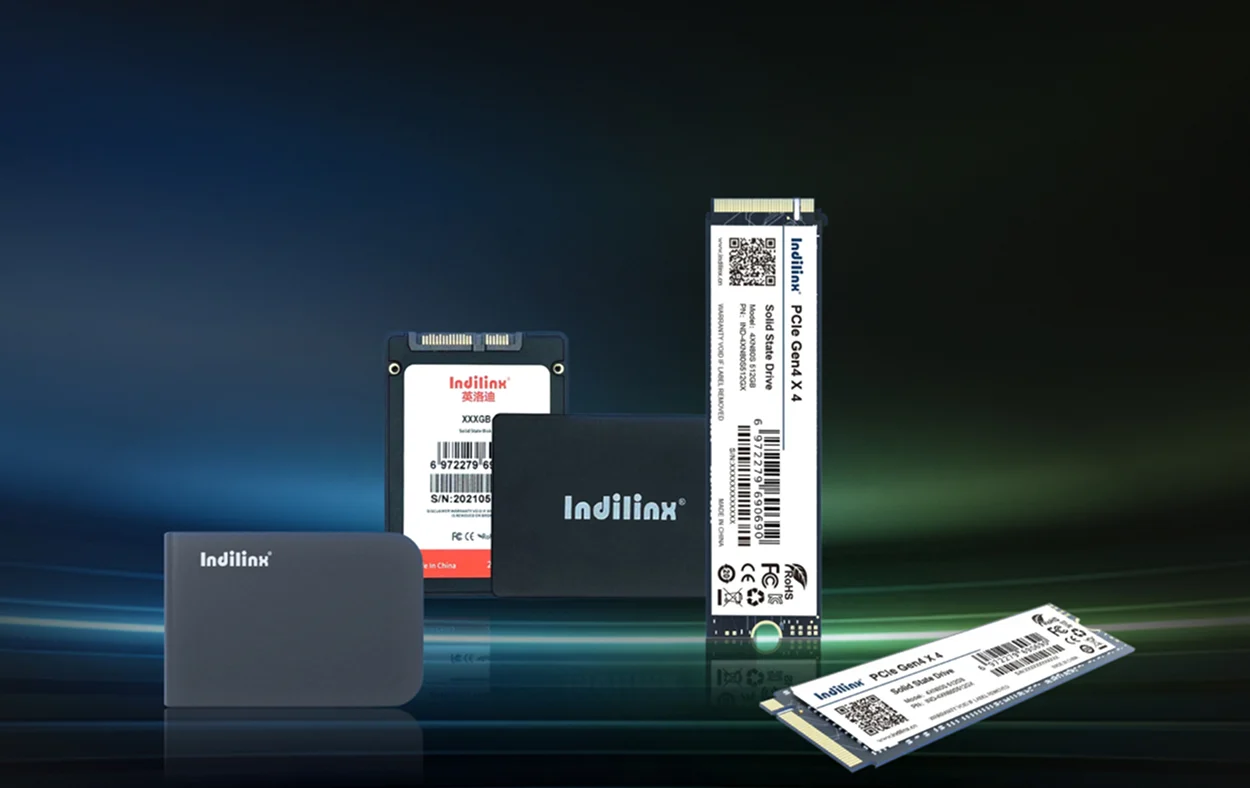
A DRAM SSD is generally more suitable for applications that require stable storage performance, frequent data access, and consistent operation under demanding workloads. Indilinx PCIe NVMe SSD (4XN80S) products provide high-speed storage solutions designed for applications that require efficient data processing and reliable performance. The dedicated DRAM cache provides additional resources for storage management, making this architecture suitable for professional systems, high-performance computing platforms, and applications where storage response directly affects overall system efficiency.
A DRAM-less SSD provides a more cost-effective solution for applications where storage workloads are relatively moderate and system efficiency is a higher priority. Indilinx M.2 SATA SSD solutions offer compact storage options suitable for systems that require balanced performance and cost efficiency. Its simplified design reduces hardware complexity while still delivering the advantages of NAND flash storage. This makes DRAM-less SSDs suitable for many consumer devices, embedded systems, and applications where maintaining a balance between cost, power consumption, and storage capability is important.
When comparing DRAM SSD and DRAM-less SSD, users should evaluate the complete application environment rather than focusing on a single specification. Factors such as workload intensity, required service life, operating conditions, system budget, and expected performance level all influence the final decision. A suitable SSD architecture ensures that the storage device can provide reliable performance while meeting the practical requirements of the target application.