







Selecting the right storage device is an important part of designing reliable industrial systems. While storage capacity and transfer speed often receive the most attention, long-term reliability, endurance, and data protection can have an even greater impact on equipment performance and maintenance costs in industrial environments.
This guide explores the key factors behind choosing an Industrial Micro SD card, including the storage requirements of industrial applications, the technologies that support long-term reliability, the practical benefits for different industries, and the essential considerations when selecting the right solution. Whether you’re developing an embedded system, upgrading industrial equipment, or evaluating storage options for mission-critical applications, this article will help you make a more informed decision.
Introduction to Industrial Micro SD Cards
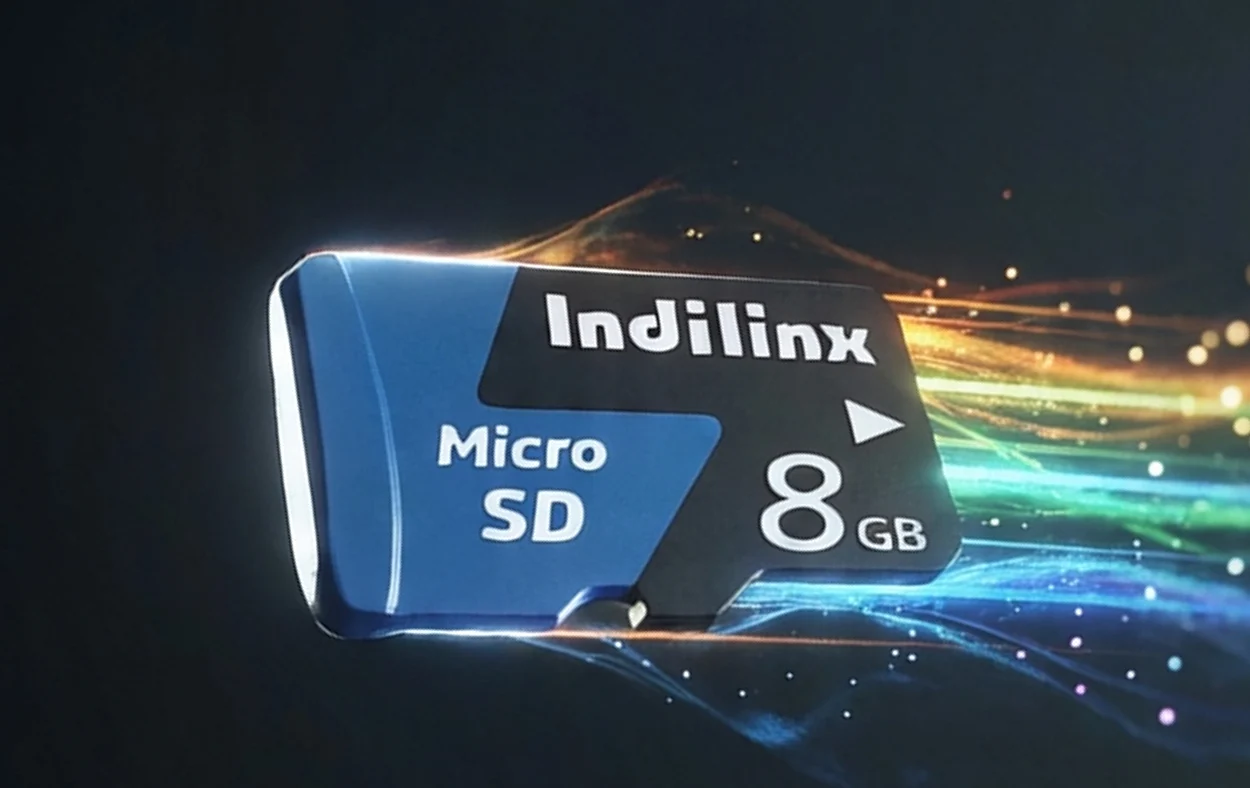
An Industrial Micro SD card is a specialized flash storage solution designed for industrial, embedded, and mission-critical applications that demand exceptional reliability and long-term stability. Although it shares the same physical size and interface as a standard consumer Micro SD card, it is engineered with industrial-grade components, optimized firmware, and advanced data management technologies to deliver consistent performance under demanding operating conditions.
Unlike consumer Micro SD cards, which are primarily designed for personal devices such as smartphones, cameras, and tablets, Industrial Micro SD cards prioritize reliability, endurance, and data integrity over everyday storage needs. Their design focuses on maintaining stable operation throughout extended deployment cycles, making them suitable for systems where storage failures can lead to equipment downtime, data loss, or increased maintenance costs.
As industrial automation, edge computing, Industrial IoT, intelligent transportation, and smart surveillance continue to expand, storage has become more than just a medium for saving data—it has become an essential component of overall system reliability. Choosing the right Micro SD card is therefore not simply a matter of capacity or speed, but of selecting a storage solution that matches the operational demands of the application.
To understand why Industrial Micro SD cards have become the preferred choice for many industrial systems, it is first necessary to examine the storage challenges these applications face and the requirements they place on long-term data reliability.
Why Do Industrial Applications Require Specialized Storage?

Industrial applications place significantly higher demands on storage systems compared to consumer electronics. This is because they must operate in environments that combine continuous data processing, harsh physical conditions, and long-term deployment requirements. In many cases, storage is not just a passive component, but a critical part of overall system stability and reliability.
Continuous Data Recording
Industrial systems often operate with uninterrupted data generation and logging.
Typical applications include:
- Factory automation systems recording production data
- Industrial IoT devices collecting sensor information
- Surveillance systems capturing 24/7 video streams
- Embedded systems processing real-time operational data
Unlike consumer use cases, these workloads involve constant read/write cycles with very limited idle time.
This leads to several key impacts:
- Increased wear on flash memory cells
- Higher probability of long-term performance degradation
- Greater stress under sustained write operations
In short, storage devices must be capable of handling continuous workload environments without performance instability.
Harsh Environmental Conditions
Industrial environments expose storage devices to conditions that are often unpredictable and physically demanding.
Common environmental factors include:
- Extreme operating temperatures (high and low)
- Mechanical vibration from industrial machinery
- Humidity and moisture exposure
- Dust and airborne particles
- Occasional mechanical shock
| Condition | Consumer Environment | Industrial Environment |
| Temperature stability | Controlled | Often extreme |
| Physical vibration | Minimal | Continuous or frequent |
| Environmental protection | High | Variable or limited |
These conditions can directly affect electronic components, increasing the risk of instability, data corruption, or premature failure if the storage device is not designed for such environments.
Long-Term System Stability
Many industrial systems are designed for continuous operation over extended periods, often without scheduled downtime.
Key characteristics include:
- 24/7 uninterrupted operation
- Multi-year deployment cycles
- Remote or hard-to-access installations
- Limited maintenance windows
Because of this, storage devices must provide:
- Stable long-term performance
- Consistent data integrity over time
- Minimal maintenance requirements
- High system uptime reliability
In these scenarios, even a single storage failure can lead to significant operational disruption and costly downtime.
Key Storage Challenges in Industrial Applications
| Challenge | Description | System Impact |
| Continuous data recording | Constant write-intensive workloads | Accelerated storage wear |
| Harsh environments | Exposure to extreme physical conditions | Reduced device stability |
| Long-term operation | Multi-year continuous usage | Higher reliability requirements |
| Limited maintenance access | Difficult replacement or repair | Higher cost of failure |
Overall, these combined factors make storage a critical component in industrial system design, where reliability and stability are as important as performance.
How Do Industrial Micro SD Cards Meet These Requirements?
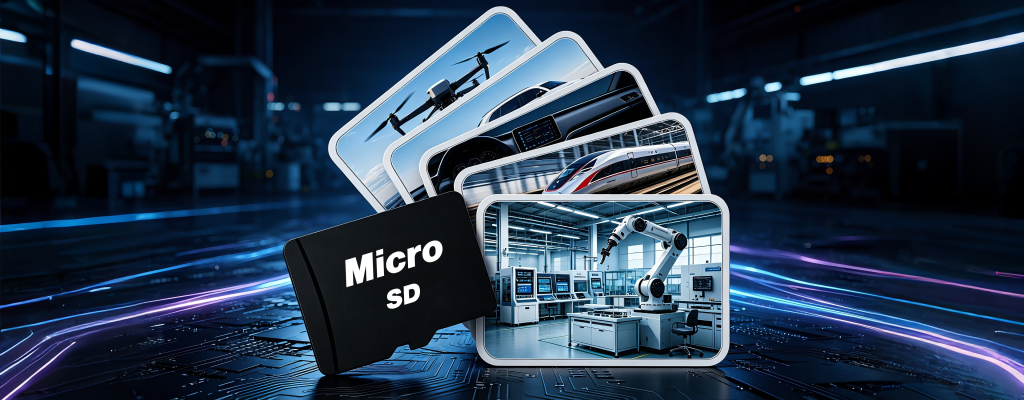
Industrial Micro SD cards are not designed around a single improvement, but rather a combination of specialized engineering approaches that work together to address different industrial challenges. Instead of focusing only on storage capacity or speed, they are built with multiple layers of hardware and firmware optimization to ensure consistent performance under demanding operating conditions.
These engineering approaches can generally be grouped into four key areas: endurance enhancement, environmental resistance, data protection, and system-level stability optimization. Each of these areas targets a specific category of industrial requirement and contributes to the overall reliability of the storage system.
The following sections break down these core technologies in detail to explain how Industrial Micro SD cards achieve stable operation in long-term industrial deployments.
High-Endurance NAND Flash
High-Endurance NAND Flash is a core component that enables Industrial Micro SD cards to withstand continuous and intensive write workloads in industrial environments. Unlike consumer-grade flash memory, which is optimized for intermittent usage patterns, high-endurance NAND is specifically designed for systems that perform constant data logging, monitoring, and recording over long operational cycles.
In industrial applications such as factory automation, surveillance systems, and edge computing devices, storage is subjected to frequent and repetitive write operations. Standard NAND flash memory has a limited number of program/erase cycles per cell, which means excessive writing can quickly degrade performance and lead to data instability. High-endurance NAND addresses this limitation through a combination of improved memory cell design and advanced controller-level optimization.
How high-endurance NAND is achieved
Industrial Micro SD cards use specialized NAND configurations and endurance-focused engineering strategies to extend the usable life of flash memory. These include:
- Use of higher-grade NAND flash (SLC, MLC, or industrial-grade 3D TLC)
- Improved silicon process control for better cell stability
- Enhanced error tolerance at the memory cell level
- Increased over-provisioning space for wear distribution
- Optimized firmware for write handling efficiency
Compared to standard consumer-grade NAND, these improvements allow the memory to sustain significantly more write cycles before degradation occurs.
Wear leveling and write distribution
A critical part of high-endurance NAND performance is how data is written across the memory array. Instead of repeatedly writing to the same physical location, Industrial Micro SD cards use wear leveling algorithms to distribute write operations evenly across all available memory blocks.
This process helps prevent localized wear, which is one of the primary causes of early flash failure. In addition, write amplification is minimized through intelligent data handling strategies, ensuring that unnecessary write cycles are reduced.
| Mechanism | Function | Result |
| Wear leveling | Distributes writes evenly across memory cells | Prevents early wear-out |
| Write optimization | Reduces redundant write operations | Extends flash lifespan |
| Over-provisioning | Allocates spare memory blocks | Maintains long-term stability |
These mechanisms work together to ensure that no single memory region is overused during long-term operation.
Performance stability under continuous workloads
One of the most important characteristics of high-endurance NAND is its ability to maintain stable performance under continuous write conditions. In industrial systems, data is rarely written in large, isolated batches. Instead, small chunks of data are continuously written over long periods of time.
Without endurance optimization, this pattern would quickly degrade flash memory performance. High-endurance NAND is specifically designed to handle:
- Continuous small-block writes
- High cumulative write volume
- Long-duration operational cycles
- Frequent data updates and logging
By managing how data is written and distributed, it ensures that performance degradation is minimized even after extended usage.
Summary of High-Endurance NAND role
High-Endurance NAND Flash forms the foundation of write durability in Industrial Micro SD cards. Through improved memory cell design, intelligent wear leveling, and optimized write management, it enables stable operation under workloads that would typically exceed the limits of consumer-grade storage devices.
This makes it a critical building block for ensuring long-term reliability in industrial storage systems where continuous data writing is unavoidable.
Wide-Temperature Design
Wide-temperature design is a key engineering feature that enables Industrial Micro SD cards to operate reliably under extreme environmental temperature conditions. Unlike consumer-grade storage devices, which are typically designed for controlled indoor environments, industrial applications often require stable performance in environments where temperature fluctuations are frequent, unpredictable, or continuously extreme.
Industrial systems such as outdoor surveillance, transportation equipment, factory automation, and energy infrastructure may operate in conditions ranging from sub-zero cold to high-heat industrial zones. In such environments, standard flash memory can experience performance instability, increased error rates, or even complete functional failure due to temperature sensitivity in semiconductor materials.
How wide-temperature performance is achieved
To ensure stable operation across a broad temperature range, Industrial Micro SD cards are built using specialized materials and engineering techniques at both the hardware and firmware levels.
Key design elements include:
- Industrial-grade NAND flash with enhanced thermal tolerance
- Temperature-resistant PCB materials and soldering processes
- Optimized controller calibration for temperature variation
- Stable voltage regulation under thermal stress
- Component-level thermal balancing design
| Design Element | Function | Result |
| Industrial NAND selection | Ensures stable cell behavior under heat/cold | Reduced error sensitivity |
| Thermal-resistant materials | Prevents physical degradation | Improved structural stability |
| Controller calibration | Adjusts operation based on temperature changes | Maintains consistent performance |
| Voltage regulation | Stabilizes power delivery under temperature shifts | Prevents instability |
These combined engineering strategies ensure that both the memory cells and controller logic can maintain stable communication even when environmental conditions change rapidly or remain at extreme levels for long periods.
Why temperature sensitivity affects flash storage
Flash memory is inherently sensitive to temperature because it relies on electrical charge retention within memory cells. When temperature increases or decreases beyond normal operating conditions, several physical behaviors inside the memory cells can be affected, including charge leakage, resistance variation, and timing instability.
In industrial environments, this means storage devices must be able to:
- Maintain stable read/write timing across temperature shifts
- Prevent data corruption caused by charge instability
- Operate consistently during thermal cycling (hot/cold transitions)
- Avoid performance degradation under sustained extreme conditions
Without wide-temperature engineering, storage devices may behave unpredictably when exposed to environmental stress, especially in outdoor or machinery-integrated deployments.
Stable operation under thermal variation
A key aspect of wide-temperature design is not only surviving extreme conditions, but also maintaining consistent operational behavior during temperature transitions. Industrial systems rarely operate at a fixed temperature; instead, they experience continuous fluctuations caused by machinery operation, weather changes, or system load variations.
Industrial Micro SD cards are designed to maintain:
- Stable read/write response times
- Consistent data transfer behavior
- Reliable controller communication
- Predictable performance across temperature cycles
This ensures that storage behavior remains consistent even when environmental conditions are not stable.
Summary of Wide-Temperature Design role
Wide-temperature design ensures that Industrial Micro SD cards can maintain stable electrical and mechanical performance across a broad range of environmental conditions. Through the use of industrial-grade materials, thermally stable NAND flash, and controller-level calibration techniques, they are able to operate reliably in environments where standard consumer storage devices would typically experience instability or failure.
Intelligent Flash Management
Intelligent Flash Management is a core firmware-level system used in Industrial Micro SD cards to coordinate how data is written, erased, and maintained across flash memory over time. While NAND flash provides the physical storage medium, it is the controller and firmware logic that determines how efficiently and reliably the memory is used under real industrial workloads.
In industrial applications, storage devices are exposed to continuous data writing, uneven workload patterns, and long-term operational stress. Without intelligent management, flash memory would quickly suffer from uneven wear, fragmented data structures, and increased error rates. Intelligent Flash Management addresses these challenges by dynamically optimizing how data is distributed and maintained inside the memory system.
Core components of flash management systems
Industrial Micro SD cards integrate multiple firmware-level mechanisms that work together as a unified management system rather than independent features.
Key components include:
- Wear leveling algorithms
- Garbage collection mechanisms
- Bad block management
- Write amplification control
- Dynamic data allocation strategies
| Component | Function | Role in system |
| Wear leveling | Distributes write cycles evenly | Prevents localized flash wear |
| Garbage collection | Reorganizes invalid data blocks | Maintains storage efficiency |
| Bad block management | Isolates defective memory areas | Ensures system stability |
| Write optimization | Reduces unnecessary writes | Extends flash endurance |
| Data allocation logic | Controls where data is stored | Balances memory usage |
These mechanisms are continuously executed in the background by the controller, ensuring that storage operations remain optimized without requiring user intervention.
How data is managed during real operation
In industrial environments, data is rarely written in large, predictable blocks. Instead, systems generate frequent small updates, logs, and real-time data streams. This creates a fragmented and dynamic storage pattern that must be continuously reorganized.
Intelligent Flash Management handles this by:
- Temporarily buffering incoming data before writing
- Consolidating small write operations into optimized blocks
- Moving valid data away from heavily used memory areas
- Cleaning up invalid or outdated data in background processes
This process reduces unnecessary write amplification and ensures that flash memory is used in a balanced and controlled manner.
Wear leveling as the core coordination mechanism
Among all flash management functions, wear leveling acts as the central coordination layer. Its primary role is to ensure that all memory blocks are used evenly over time, preventing specific areas from being overused.
There are two main types:
- Static wear leveling: moves long-term inactive data to balance usage
- Dynamic wear leveling: distributes active write operations across available blocks
Together, they ensure that both active and inactive regions of memory contribute evenly to overall usage, reducing the risk of premature failure in localized areas.
System-level impact of flash management
Rather than functioning as isolated features, these mechanisms operate as a unified control system embedded within the storage controller. This allows Industrial Micro SD cards to maintain predictable internal behavior even under highly variable workloads.
Key operational characteristics include:
- Continuous background optimization
- Adaptive response to workload changes
- Balanced memory utilization over time
- Reduced fragmentation of storage space
This system-level coordination ensures that the storage device behaves consistently even under long-term, high-intensity usage scenarios.
Summary of Intelligent Flash Management role
Intelligent Flash Management acts as the operational control layer of Industrial Micro SD cards. By coordinating wear leveling, garbage collection, bad block handling, and write optimization, it ensures that flash memory is used efficiently and evenly over time.
This coordinated management system allows Industrial Micro SD cards to maintain stable internal structure and predictable behavior under continuous industrial workloads.
Data Protection Technologies
Data protection technologies are a critical component of Industrial Micro SD cards, ensuring that stored information remains accurate, consistent, and recoverable even under unstable operating conditions. In industrial environments, data is often mission-critical, meaning that even small errors or partial corruption can lead to system malfunctions, production disruption, or loss of operational records.
Unlike consumer storage, where minor data inconsistencies may only affect user files, industrial storage must maintain a much higher level of data integrity. To achieve this, Industrial Micro SD cards implement multiple layers of protection that work across the physical memory, controller firmware, and system monitoring levels.
Layer 1: Error detection and correction mechanisms
The first layer of protection focuses on identifying and correcting data-level errors that naturally occur in flash memory over time.
Key technologies include:
- ECC (Error Correction Code)
- Bit error detection algorithms
- Real-time data validation processes
- Read-retry mechanisms
| Technology | Function | Purpose |
| ECC | Detects and corrects bit-level errors | Maintains data accuracy |
| Read-retry | Re-reads data using adjusted parameters | Recovers marginal data |
| Data validation | Checks consistency during read/write | Prevents silent corruption |
These mechanisms ensure that minor memory-level errors do not propagate into usable data corruption during normal system operation.
Layer 2: Power-loss and write interruption protection
Industrial systems are often exposed to unstable power conditions, including sudden shutdowns, voltage fluctuations, or incomplete write cycles. These events can lead to partial data writes, which are one of the most common causes of file corruption in flash storage systems.
To mitigate this, Industrial Micro SD cards implement:
- Power-loss protection algorithms
- Transaction-based write handling
- Data journaling mechanisms
- Safe write completion protocols
| Mechanism | Function | Impact |
| Power-loss handling | Detects sudden power interruption | Prevents incomplete writes |
| Transaction control | Ensures atomic write operations | Maintains data consistency |
| Journaling system | Records write progress | Enables recovery after interruption |
These systems ensure that data writes are either fully completed or safely rolled back, preventing partial or corrupted file states.
Layer 3: System monitoring and predictive maintenance
Beyond immediate error correction and protection, Industrial Micro SD cards also include monitoring systems that track the long-term health of the storage device.
Key monitoring features include:
- SMART (Self-Monitoring, Analysis, and Reporting Technology)
- Wear level tracking
- Error rate monitoring
- Remaining lifespan estimation
These systems continuously collect internal performance data and provide visibility into the condition of the flash memory over time.
| Monitoring Metric | Function | Purpose |
| Wear level count | Tracks flash usage cycles | Estimates remaining lifespan |
| Error rate tracking | Monitors read/write errors | Detects early degradation |
| Health status indicators | Aggregates device condition | Supports maintenance planning |
By continuously analyzing internal behavior, the system can identify early signs of degradation before they lead to critical failures.
Integrated protection system behavior
Rather than operating independently, these three protection layers work together as a unified system:
- ECC handles real-time data correction
- Power-loss protection prevents incomplete writes
- Monitoring systems track long-term reliability trends
This multi-layered approach ensures that data integrity is maintained not only during active operation, but also across the entire lifecycle of the storage device.
Summary of Data Protection Technologies role
Data Protection Technologies form the final safeguard layer in Industrial Micro SD card architecture. By combining error correction, power-loss protection, and system-level monitoring, they ensure that data remains consistent, recoverable, and reliable under unpredictable industrial operating conditions.
What Value Do Industrial Micro SD Cards Bring to Equipment?
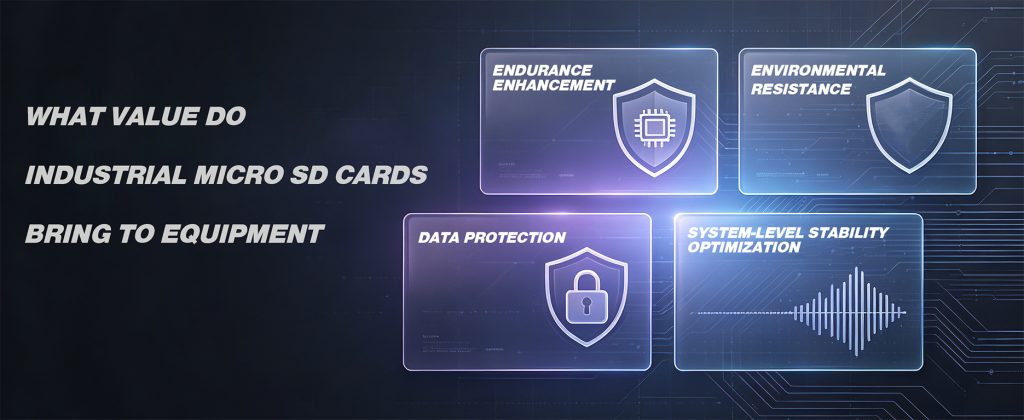
Industrial Micro SD cards are not only designed to meet technical requirements but also to deliver measurable operational value in industrial systems. By improving storage reliability, reducing failure risks, and supporting long-term stable operation, they play a direct role in enhancing overall equipment performance and operational efficiency.
These value contributions are especially important in industrial environments where system downtime, maintenance costs, and data loss can have significant operational and financial impacts.
Improve Equipment Reliability
One of the most important values of Industrial Micro SD cards is improving overall equipment reliability. Since storage is a critical component in most embedded and industrial systems, its stability directly affects system behavior.
When storage operates consistently:
- System processes run without interruption
- Data logging remains stable and accurate
- Application performance is not affected by storage errors
- Unexpected system failures are significantly reduced
In industrial environments such as automation systems, surveillance devices, and edge controllers, stable storage behavior helps ensure that the entire system can operate continuously without unexpected interruptions.
Extend System Service Life
Industrial equipment is typically designed for long-term deployment, often operating for several years without replacement. In such scenarios, storage durability becomes a key factor in determining overall system lifespan.
Industrial Micro SD cards contribute to longer service life by:
- Supporting sustained write-intensive workloads
- Maintaining consistent performance over extended periods
- Reducing wear-related degradation of storage components
- Ensuring stable operation throughout long deployment cycles
| System Factor | Consumer Storage Impact | Industrial Storage Impact |
| Long-term writing | Faster degradation | Stable endurance |
| Continuous operation | Performance decline | Sustained stability |
| Deployment lifecycle | Shorter lifespan | Extended service life |
This allows industrial systems to remain operational for longer periods without requiring storage replacement or system redesign.
Reduce Maintenance and Downtime
In industrial environments, maintenance operations are often costly, time-consuming, and sometimes difficult due to remote or inaccessible installations. Any storage-related failure can lead to system downtime, which directly affects productivity.
Industrial Micro SD cards help reduce these risks by providing more stable long-term operation.
Key operational advantages include:
- Lower frequency of storage-related failures
- Reduced need for on-site maintenance interventions
- Fewer unexpected system shutdowns
- More predictable maintenance scheduling
By minimizing storage instability, industrial systems can maintain higher uptime levels and reduce operational disruption caused by unplanned maintenance events.
Protect Critical Data
In many industrial applications, stored data is not just operational—it is mission-critical. This includes production logs, monitoring data, control instructions, and system records. Any loss or corruption of this data can lead to system errors or operational inconsistencies.
Industrial Micro SD cards help protect data by ensuring:
- Stable data writing under continuous workloads
- Reduced risk of corruption during operation
- Reliable storage of long-term historical records
- Improved data consistency across system cycles
| Data Risk | Industrial Storage Impact |
| Unexpected write interruption | Reduced corruption risk |
| Long-term data accumulation | Stable storage retention |
| Continuous logging | Consistent data integrity |
This makes them suitable for environments where data accuracy and persistence are essential to system operation.
Business Benefits Summary
The use of Industrial Micro SD cards brings multiple operational and business-level advantages to industrial systems by improving reliability, extending system lifespan, reducing maintenance requirements, and protecting critical data.
| Value Area | Business Impact |
| Reliability improvement | Reduced system failure risk |
| Service life extension | Lower replacement frequency |
| Maintenance reduction | Lower operational cost |
| Data protection | Improved operational safety |
Together, these benefits contribute to lower total cost of ownership (TCO) and more stable long-term system operation in industrial environments.
Which Industrial Scenarios Benefit the Most?
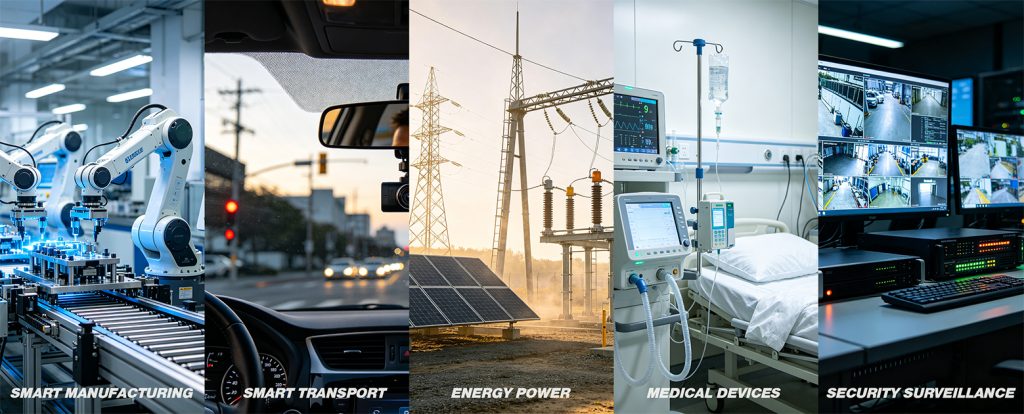
Industrial Micro SD cards are widely used across different industrial sectors where systems require continuous operation, stable data storage, and high reliability under demanding conditions. Their value becomes most evident in environments where system downtime, data loss, or storage instability can directly affect operational performance.
The following sections highlight the most common industrial applications where Industrial Micro SD cards are typically deployed.
Industrial Automation Systems
Industrial automation systems rely heavily on stable and continuous data storage to ensure smooth production processes. These systems are often integrated into manufacturing lines, robotics, and control systems where real-time data logging and process monitoring are essential.
Typical use cases include:
- Factory production line controllers
- PLC-based automation systems
- Robotic control modules
- Machine monitoring systems
Key storage requirements in this environment:
- Continuous operational data logging
- Stable performance under 24/7 workloads
- Resistance to vibration from industrial machinery
- Long-term deployment stability
In these systems, storage instability can directly affect production efficiency and system coordination.
Industrial IoT Devices
Industrial IoT (IIoT) devices are widely deployed for real-time monitoring, data collection, and remote control across industrial environments. These devices often operate in distributed and sometimes hard-to-access locations.
Common applications include:
- Environmental monitoring sensors
- Smart grid and energy management devices
- Remote data acquisition systems
- Edge computing nodes
Key characteristics of this environment:
- Continuous sensor data recording
- Remote deployment with limited maintenance access
- Network-based data synchronization
- Long-term autonomous operation
Reliable storage is essential to ensure uninterrupted data collection and transmission in distributed systems.
Security and Video Surveillance
Security and surveillance systems require continuous recording and high data integrity to ensure that no critical footage is lost. These systems often operate 24/7 in both indoor and outdoor environments.
Typical use cases include:
- IP camera recording systems
- Security monitoring platforms
- Public infrastructure surveillance
- Transportation security systems
Key storage requirements:
- Continuous video recording without interruption
- High write frequency over long periods
- Stable operation under temperature variation
- Resistance to unexpected power loss
Storage reliability directly impacts the completeness and usability of recorded data in security applications.
Medical and Transportation Equipment
Medical and transportation systems rely on stable storage to ensure accurate data recording and system reliability in safety-critical environments. In these applications, storage failure can have significant operational consequences.
Typical use cases include:
- Medical monitoring devices
- Diagnostic equipment data storage
- Railway and traffic control systems
- Fleet tracking and navigation systems
Key requirements:
- High data integrity for sensitive information
- Stable operation in regulated environments
- Long-term system reliability
- Resistance to environmental variation
In these sectors, storage stability is closely tied to system safety and operational compliance.
Recommended Storage Priorities by Application
Different industrial scenarios place different levels of emphasis on storage characteristics. The following table summarizes the primary priorities across application types:
| Application | Primary Priority | Secondary Priority |
| Industrial Automation | Stability & endurance | Vibration resistance |
| Industrial IoT | Long-term reliability | Remote operability |
| Surveillance Systems | Continuous write capability | Power-loss protection |
| Medical & Transportation | Data integrity | System safety compliance |
Across all applications, the most common shared requirement is long-term stable operation under continuous workloads, which is a defining characteristic of Industrial Micro SD card usage.
How to Choose the Right Industrial Micro SD Card
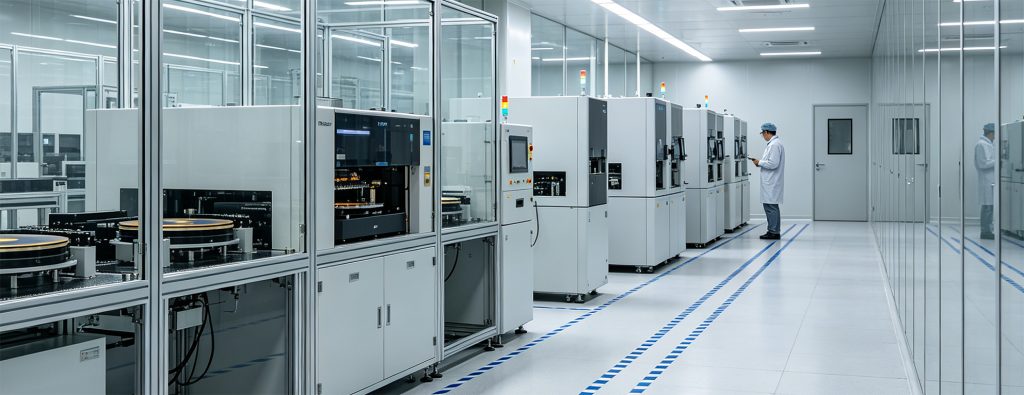
Selecting the right Industrial Micro SD card requires more than simply comparing storage capacity or read/write speed. In industrial environments, storage performance must align with workload intensity, environmental conditions, system lifespan expectations, and data protection requirements. A mismatch in any of these factors can lead to reduced system stability, increased maintenance frequency, or premature storage failure.
To make a reliable selection, it is important to evaluate Industrial Micro SD cards from multiple technical and operational perspectives rather than focusing on a single specification.
Choose the Right Capacity
Storage capacity determines how much data the system can store locally over time. In industrial applications, capacity planning is closely tied to data generation frequency and retention requirements.
Common application considerations include:
- Continuous sensor data logging
- Video recording duration (for surveillance systems)
- Event-based data storage in control systems
- Local buffering for network interruption scenarios
General capacity selection guidelines:
- Low data systems (sensors, control signals): 8GB–32GB
- Medium data systems (automation, IoT gateways): 32GB–128GB
- High data systems (video, edge computing): 128GB and above
Choosing appropriate capacity ensures that the system avoids both storage overflow and unnecessary over-provisioning costs.
Select the Appropriate NAND Type
Different NAND flash types offer different levels of endurance, performance stability, and cost efficiency. Understanding NAND structure is essential for aligning storage with workload intensity.
Common NAND types used in Industrial Micro SD cards:
- SLC (Single-Level Cell)
- MLC (Multi-Level Cell)
- Industrial-grade TLC (Triple-Level Cell)
| نوع NAND | Endurance Level | Cost Level | Typical Use Case |
| SLC | Highest | High | Mission-critical systems |
| MLC | Medium-High | Medium | Industrial automation |
| TLC (Industrial-grade) | Medium | Lower | General industrial applications |
Selection should be based on write intensity and system criticality rather than capacity alone.
Evaluate Endurance Requirements
Endurance defines how much data can be written to the storage device over its lifetime. In industrial environments, where continuous data logging is common, endurance is one of the most important selection factors.
Key endurance indicators include:
- TBW (Terabytes Written) rating
- P/E cycle rating (Program/Erase cycles)
- Workload intensity (continuous vs intermittent writes)
- Expected deployment lifespan
Selection considerations:
- High-write environments require higher TBW ratings
- 24/7 systems require sustained endurance performance
- Long lifecycle systems require conservative endurance planning
Proper endurance evaluation helps prevent premature wear-out and unexpected storage failure.
Check Environmental Specifications
Industrial deployments often operate in environments that are physically demanding and thermally unstable. Environmental compatibility ensures stable operation under real-world conditions.
Key environmental parameters:
- Operating temperature range
- Storage temperature range
- Vibration resistance level
- Shock resistance rating
- Humidity tolerance
| Parameter | Industrial Requirement | Importance |
| Temperature range | Wide (-40°C to +85°C typical) | Ensures stable operation in extreme climates |
| Vibration resistance | High | Prevents mechanical failure |
| Shock tolerance | Reinforced | Protects against physical impact |
| Humidity resistance | Enhanced | Avoids moisture-related degradation |
Environmental mismatch is one of the most common causes of early storage failure in industrial systems.
Review Firmware and Data Protection Features
Beyond hardware specifications, firmware-level features play a critical role in ensuring long-term reliability and data integrity.
Key features to evaluate include:
- Wear leveling algorithms
- ECC (Error Correction Code) support
- Power-loss protection mechanisms
- Bad block management
- SMART health monitoring
These features work together to ensure:
- Stable data writing under continuous workloads
- Recovery from unexpected power interruptions
- Long-term consistency of storage performance
- Early detection of potential storage degradation
In industrial systems, firmware intelligence is often as important as hardware endurance.
Industrial Micro SD Selection Checklist
To simplify selection, the following checklist summarizes key evaluation criteria:
| الفئة | Key Question |
| السعة | Does it match data volume and retention needs? |
| نوع NAND | Is endurance aligned with workload intensity? |
| Endurance | Does TBW support expected system lifespan? |
| Environment | Can it withstand operating conditions? |
| Firmware | Does it support data protection and monitoring? |
A balanced evaluation across these dimensions ensures that the selected Industrial Micro SD card meets both technical and operational requirements.
Final Thoughts

Industrial Micro SD cards play a critical role in modern industrial systems where reliability, stability, and long-term performance are essential. Unlike consumer-grade storage devices, they are engineered specifically to handle continuous workloads, harsh environmental conditions, and mission-critical data requirements.
Across industrial automation, IoT systems, surveillance applications, medical equipment, and transportation infrastructure, storage is no longer a passive component. It directly influences system uptime, data integrity, and overall operational efficiency. For this reason, selecting the right storage solution is not simply a technical decision, but a system-level design consideration.
As discussed throughout this article, Industrial Micro SD cards achieve their reliability through a combination of high-endurance NAND architecture, wide-temperature design, intelligent flash management, and multi-layer data protection technologies. These engineering elements work together to ensure stable performance under conditions where standard storage solutions would typically fail.
At the same time, choosing the right Industrial Micro SD card requires careful evaluation of capacity, endurance, environmental compatibility, and firmware features. A well-matched storage solution can significantly reduce system risk, improve operational stability, and support long-term deployment goals.
Ultimately, Industrial Micro SD cards are not defined by a single specification, but by their ability to maintain consistent and reliable performance over time in demanding environments. Understanding this principle is key to making informed decisions when designing or upgrading industrial systems.