







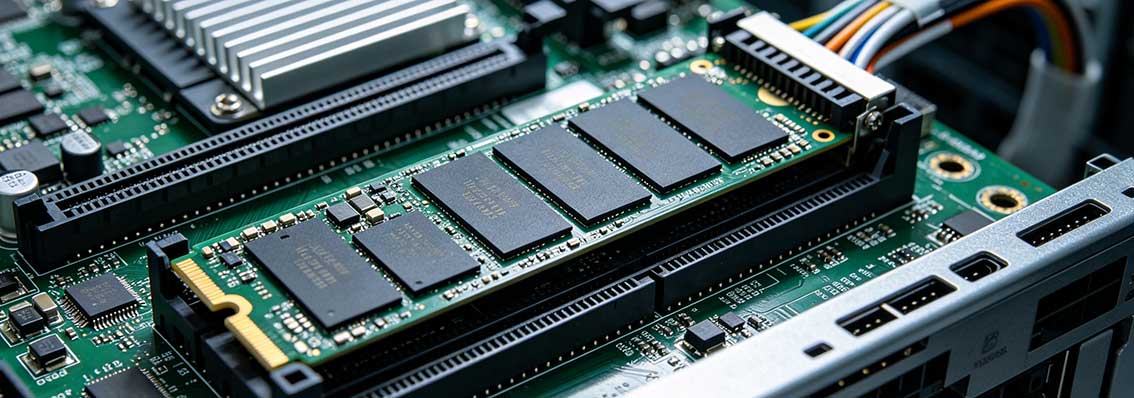
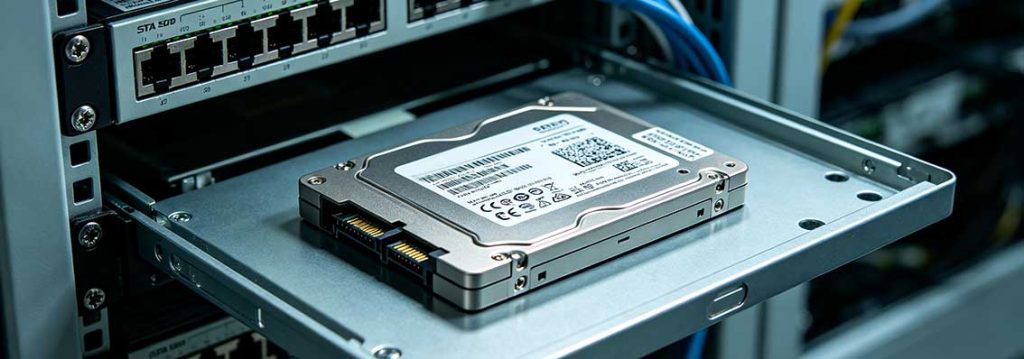
Selecting an industrial SSD requires a detailed evaluation of application conditions rather than simply comparing storage capacity or transfer speed. Industrial environments often involve continuous operation, intensive data writing, temperature variations, vibration, and strict reliability requirements. Therefore, an industrial SSD must be selected according to workload characteristics, environmental conditions, system architecture, and expected service life.
Unlike consumer SSDs designed for general computing, industrial SSDs are developed for applications that require stable performance and long-term availability. Factors such as NAND Flash endurance, controller technology, error correction capability, power protection features, and operating temperature range directly influence storage reliability. Understanding these technical factors helps engineers select an industrial SSD that can maintain consistent performance throughout the entire product lifecycle.
Evaluate Industrial SSD Endurance According to Application Write Workloads
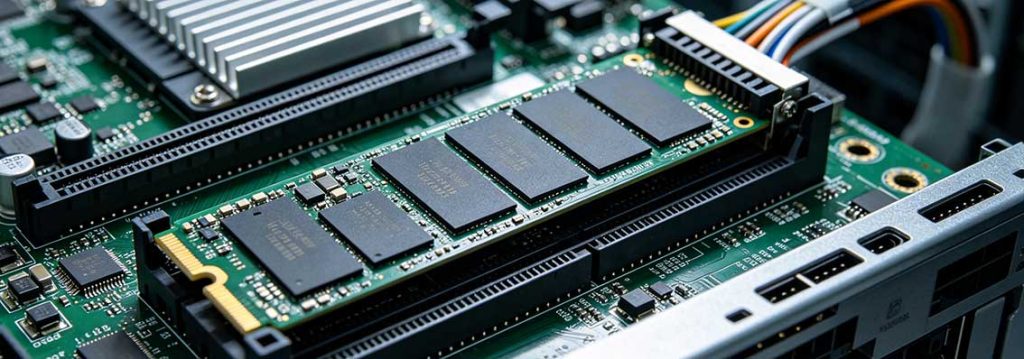
The endurance capability of an industrial SSD determines whether the drive can maintain reliable operation under continuous and intensive data writing conditions. Many industrial applications, including factory automation systems, surveillance equipment, medical devices, and edge computing platforms, generate frequent data updates that place significant pressure on storage devices. Compared with consumer SSDs, industrial SSDs need to support higher write workloads and longer operating periods.
When evaluating industrial SSD endurance, engineers should consider specifications such as Total Bytes Written (TBW), Drive Writes Per Day (DWPD), NAND Flash type, and expected service life. These parameters help estimate whether the SSD can handle the application’s daily data generation and maintain stable performance over years of operation. Selecting an SSD with insufficient endurance may lead to faster wear, reduced performance, and increased maintenance requirements.
In addition to endurance ratings, technologies such as wear leveling, garbage collection optimization, and over-provisioning also influence the long-term reliability of an industrial SSD. These functions help distribute write operations more evenly across memory cells, reduce unnecessary wear, and improve storage stability in demanding industrial environments.
Industrial SSD Endurance Is Determined Through TBW and DWPD Evaluation
TBW (Total Bytes Written) and DWPD (Drive Writes Per Day) are two important specifications used to evaluate industrial SSD endurance. TBW indicates the total amount of data that can be written to the SSD during its designed lifespan, while DWPD describes how many times the entire storage capacity can be rewritten every day within the specified service period.
When selecting an industrial SSD, users should compare these endurance indicators with the actual application workload instead of choosing based only on storage capacity. For systems with continuous data recording or frequent database updates, higher TBW and DWPD ratings provide additional reliability margins. Proper endurance evaluation allows engineers to estimate SSD lifespan more accurately and select a storage solution that meets long-term operational requirements.
Wear Leveling and Over-Provisioning Extend Industrial SSD Operating Life
Wear leveling is an important technology that improves the durability of an industrial SSD by balancing the usage of NAND Flash memory cells. Without effective wear management, certain blocks may reach their write cycle limits earlier than others, causing premature failures. By evenly distributing data writes across available memory locations, wear leveling helps maximize the usable lifespan of the SSD.
Over-provisioning provides additional reserved NAND space for internal SSD operations, allowing the controller to perform garbage collection and data management more efficiently. This reserved capacity helps reduce write amplification, maintain consistent performance, and improve endurance during intensive workloads. For industrial applications requiring continuous operation, these technologies are essential for maintaining reliable storage performance throughout the product lifecycle.
Assess Industrial SSD Environmental Adaptability for Harsh Operating Conditions
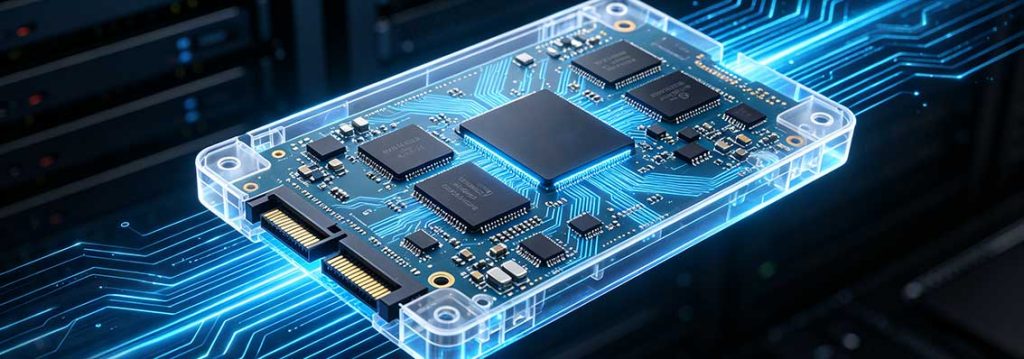
Industrial applications often operate in environments that are more demanding than standard computing systems. Equipment installed in factories, outdoor facilities, transportation systems, or industrial control platforms may experience wide temperature changes, vibration, mechanical shock, and continuous operation. These conditions can affect SSD reliability if the storage device is not designed for industrial requirements.
A suitable industrial SSD should provide reliable performance under the actual operating environment rather than only meeting standard laboratory conditions. Matching SSD environmental specifications with application requirements helps reduce unexpected failures, protect stored data, and improve the overall reliability of industrial systems.
Industrial SSD Selection Depends on Application Environmental Conditions
The operating environment is one of the most important factors when selecting an industrial SSD because external conditions can directly influence storage stability and data reliability. Industrial equipment may be installed in locations with temperature fluctuations, mechanical vibration, dust exposure, or continuous operation requirements, which are significantly different from typical consumer computing environments.
Before choosing an industrial SSD, engineers should analyze the actual working conditions of the application, including installation location, operating temperature range, vibration intensity, mechanical impact frequency, and expected operating duration. For example, an SSD used in factory automation equipment needs to withstand continuous vibration, while an SSD deployed in outdoor monitoring systems may require stronger temperature adaptability and environmental protection capability.
Evaluating environmental conditions before selection helps ensure that the industrial SSD can maintain stable data access and reliable operation throughout the application lifecycle. This prevents storage failures caused by unsuitable environmental specifications and improves overall system availability.
Industrial SSD Requires Wide Temperature and Mechanical Protection Capabilities
Temperature variation and mechanical stress are common challenges that affect industrial SSD performance. Unlike standard SSDs designed for controlled indoor environments, industrial SSDs often need to operate under extended temperature ranges, including low-temperature startup and high-temperature continuous operation. Proper temperature resistance helps maintain stable electrical performance and prevents data errors caused by thermal changes.
Mechanical protection is also essential for industrial applications involving vibration and shock. Industrial SSDs designed for factory equipment, transportation systems, and embedded devices typically require stronger structural designs to prevent component damage caused by continuous movement or sudden impact. These protections help maintain stable connections between internal components and reduce the risk of storage interruption.
By selecting an industrial SSD with suitable temperature and mechanical protection capabilities, users can ensure that the storage device continues to perform reliably even in challenging operating environments.
Industrial SSD Uses Specialized Design to Improve Environmental Reliability
The internal design of an industrial SSD plays an important role in improving reliability under harsh operating conditions. Industrial SSDs are typically developed with components and firmware optimized for demanding environments, allowing them to maintain stable performance when exposed to temperature changes, vibration, and long-term operation.
Compared with consumer storage devices, industrial SSD solutions often include enhanced component selection, optimized firmware algorithms, and improved error management mechanisms. These designs help the SSD maintain data integrity and reduce the possibility of unexpected failures caused by environmental stress. For industrial systems that require continuous operation, these reliability features are critical for maintaining stable storage performance.
Choosing an industrial SSD with application-oriented design allows manufacturers and engineers to build more reliable systems. By matching SSD design characteristics with environmental requirements, users can reduce maintenance requirements and improve the long-term stability of industrial equipment.
Match Industrial SSD Performance with Real-Time Data Processing Requirements

Performance requirements for industrial SSDs vary significantly depending on application workloads and data processing demands. Some industrial systems require high-speed data transmission for real-time analysis, while others focus more on consistent response time and stable operation during long-term usage. Therefore, SSD selection should be based on actual application requirements instead of only choosing the highest benchmark performance.
When evaluating industrial SSD performance, engineers should consider sequential read/write speed, random access performance, input/output operations per second (IOPS), and sustained performance under continuous workloads. Sequential performance is important for applications involving large data transfers, while random performance is more critical for systems that frequently access small files or process multiple data requests simultaneously.
A suitable industrial SSD should provide stable performance throughout extended operation rather than only delivering short-term peak speeds. Evaluating sustained performance helps ensure that the SSD can support real industrial workloads while maintaining efficient data processing and reliable system response.
Industrial SSD Performance Selection Depends on Application Workloads
The performance requirements of an industrial SSD should be determined by the actual workload characteristics of the application rather than only comparing maximum speed specifications. Different industrial systems generate and process data in different ways, which creates different storage performance requirements. For example, industrial vision systems may continuously capture and store large amounts of image data, requiring strong sequential write performance, while industrial controllers and embedded systems may frequently access small files and configuration data, making random access performance more important.
When selecting an industrial SSD, engineers should analyze the application’s data processing process, including data volume, access frequency, response time requirements, and operating patterns. A storage device with extremely high benchmark performance may not provide practical advantages if its performance characteristics do not match the actual workload. Proper performance matching helps ensure that the SSD can efficiently handle real operating conditions without unnecessary cost or resource consumption.
By evaluating workload requirements before selecting an industrial SSD, users can choose a storage solution that provides the appropriate balance between processing efficiency, reliability, and long-term operational stability. This approach is especially important for industrial applications where storage performance directly affects equipment response, production efficiency, and system availability.
Industrial SSD Sequential and Random Performance Match Different Data Processing Requirements
Sequential and random performance represent two different aspects of industrial SSD capability, and each plays an important role in specific application scenarios. Sequential read and write performance measures how efficiently an SSD handles continuous streams of large data blocks. It is particularly important for applications such as industrial cameras, data acquisition systems, automated inspection equipment, and monitoring platforms that generate large files continuously.
Random performance focuses on handling frequent small data requests and multiple simultaneous access operations. This capability is essential for industrial computers, embedded systems, and edge devices that regularly process operating instructions, application files, databases, and system logs. Poor random performance may affect system response speed even when the SSD has high sequential transfer rates.
When evaluating an industrial SSD, engineers should consider which type of data access is dominant in the application. Selecting an SSD based on actual data processing patterns allows the storage device to provide more efficient performance and avoid situations where the drive delivers strong specifications but fails to meet real industrial workload requirements.
Industrial SSD Sustained Performance Ensures Reliable Real-Time Data Processing
For industrial applications, storage performance must remain stable during continuous operation rather than only achieving high speed during short benchmark tests. Many industrial systems run for extended periods and continuously generate, process, and store data. Under these conditions, an industrial SSD must maintain consistent read and write performance to prevent delays, system response problems, or data processing interruptions.
Sustained performance evaluates how well an industrial SSD performs under long-duration workloads. Factors such as internal data management, background operations, workload intensity, and thermal conditions can influence whether the SSD maintains stable performance over time. A drive that provides high peak speed but experiences significant performance drops during continuous operation may not be suitable for industrial environments.
Selecting an industrial SSD with reliable sustained performance helps ensure predictable system behavior throughout the equipment lifecycle. This is particularly important for automation systems, edge computing platforms, and real-time monitoring applications where unstable storage performance may directly affect operational efficiency and system reliability.
Industrial SSD Performance Stability Prevents Speed Degradation During Continuous Operation
Maintaining stable performance during long-term operation requires effective internal storage management technologies within an industrial SSD. Continuous data writing and frequent access operations can create additional pressure on storage resources, making performance optimization mechanisms important for maintaining consistent operation.
A reliable industrial SSD should be capable of managing background processes efficiently while continuing to provide stable data access performance. Technologies such as optimized firmware algorithms, effective memory management, and intelligent data handling mechanisms help reduce performance fluctuations caused by intensive workloads.
For industrial systems that require real-time data processing, performance stability is often more valuable than short-term peak speed. By selecting an industrial SSD designed for sustained workloads, users can reduce the risk of unexpected performance degradation and ensure that storage operations remain reliable throughout continuous industrial operation.
Analyze Industrial SSD NAND Flash and Controller Technology for Data Reliability
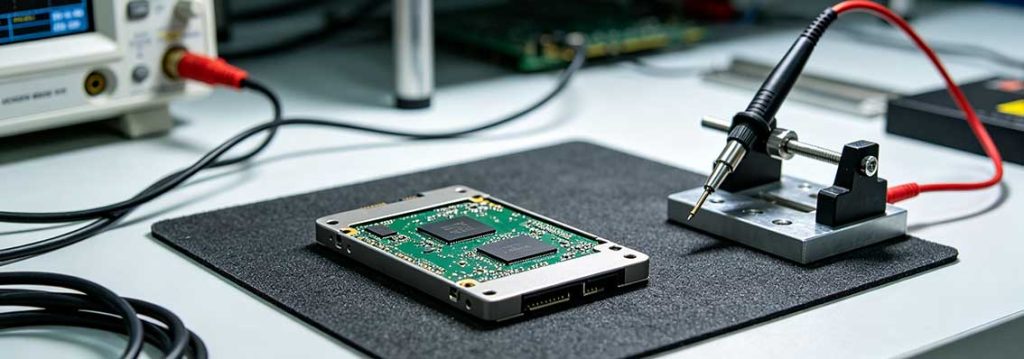
The internal hardware design of an industrial SSD directly affects its reliability, endurance, and long-term performance. NAND Flash is responsible for storing data, while the controller manages communication between the host system and memory components. Together, these two components determine how effectively an SSD handles data storage, error management, and performance optimization.
When evaluating industrial SSD solutions, engineers should consider NAND Flash quality, memory architecture, and controller capabilities. Different NAND technologies provide different levels of endurance, storage density, and data retention performance. The controller also plays an important role through functions such as ECC error correction, bad block management, wear leveling, and flash management algorithms.
A well-designed industrial SSD combines reliable NAND Flash with advanced controller technology to maintain data integrity during continuous operation. These technologies help reduce the impact of memory wear, improve error handling capability, and ensure stable storage performance in industrial applications that require high reliability.
Industrial SSD NAND Flash Determines Data Storage Reliability
The NAND Flash type used in an industrial SSD directly influences data reliability, endurance capability, and long-term storage stability. As the primary component responsible for storing data, NAND Flash must maintain accurate data retention and stable operation under different industrial workloads. Compared with consumer applications, industrial environments often require SSDs to operate continuously with frequent data access and strict reliability requirements.
When evaluating an industrial SSD, engineers should consider NAND Flash characteristics such as memory type, write endurance, data retention capability, and operating conditions. Different NAND technologies provide different balances between storage density, performance, cost, and durability. Selecting unsuitable NAND Flash may result in reduced reliability when the SSD is exposed to intensive workloads or extended operating periods.
A suitable NAND Flash solution allows an industrial SSD to maintain consistent data storage performance throughout its service life. By matching NAND Flash characteristics with application requirements, users can achieve better reliability and reduce the risk of data loss caused by memory degradation.
Industrial SSD NAND Flash Selection Affects Endurance and Data Retention Performance
Different NAND Flash technologies have different characteristics in terms of write cycles, storage density, and data retention capability. For industrial applications that require frequent data updates, selecting NAND Flash with suitable endurance characteristics is essential to prevent premature memory wear and maintain stable operation.
Data retention performance is also an important consideration because industrial SSDs may need to preserve stored information during long periods of operation or when the system experiences power interruptions. High-quality NAND Flash combined with proper storage management helps maintain data accuracy and reduce potential reliability issues.
When choosing an industrial SSD, engineers should evaluate NAND Flash specifications together with application workload, environmental conditions, and expected service requirements. This ensures that the selected SSD provides reliable storage performance for industrial systems with different operational demands.
Industrial SSD Controller Technology Improves Data Management Reliability
The controller is a critical component that manages communication between the host system and NAND Flash memory inside an industrial SSD. It controls data transfer processes, coordinates memory operations, and performs important reliability functions that directly influence storage stability.
An advanced controller helps an industrial SSD manage complex workloads by providing functions such as error correction, bad block management, wear leveling, and flash translation algorithms. These technologies allow the SSD to identify potential memory issues, distribute data operations efficiently, and maintain consistent performance during continuous operation.
For industrial applications requiring high availability, controller capability is as important as NAND Flash quality. A reliable controller improves data integrity, reduces operational risks, and enables the industrial SSD to maintain stable storage performance under demanding working conditions.
Industrial SSD Controllers Use Error Management Technologies to Maintain Stability
Error management technologies are essential for maintaining reliable operation in an industrial SSD. ECC (Error Correction Code) helps detect and correct data errors caused by NAND Flash wear or operating conditions, while bad block management prevents damaged memory areas from affecting normal storage functions.
Wear leveling and flash management algorithms further improve SSD reliability by optimizing how data is distributed across memory cells. These technologies reduce uneven memory usage and help extend the effective service life of the storage device.
By combining advanced controller functions with reliable NAND Flash components, an industrial SSD can achieve stronger data protection and more predictable performance. This hardware combination is especially important for industrial automation, embedded systems, and edge computing applications where data reliability directly affects system operation.
Verify Industrial SSD Interface Compatibility with Existing Hardware Systems
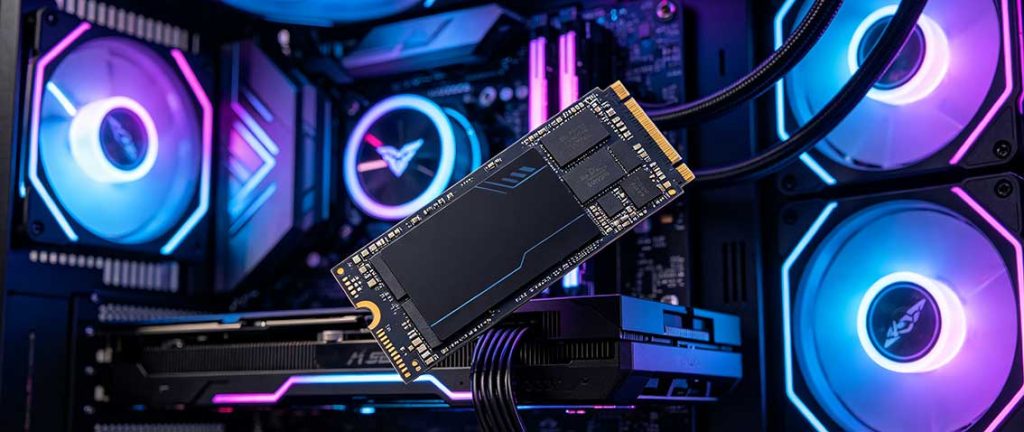
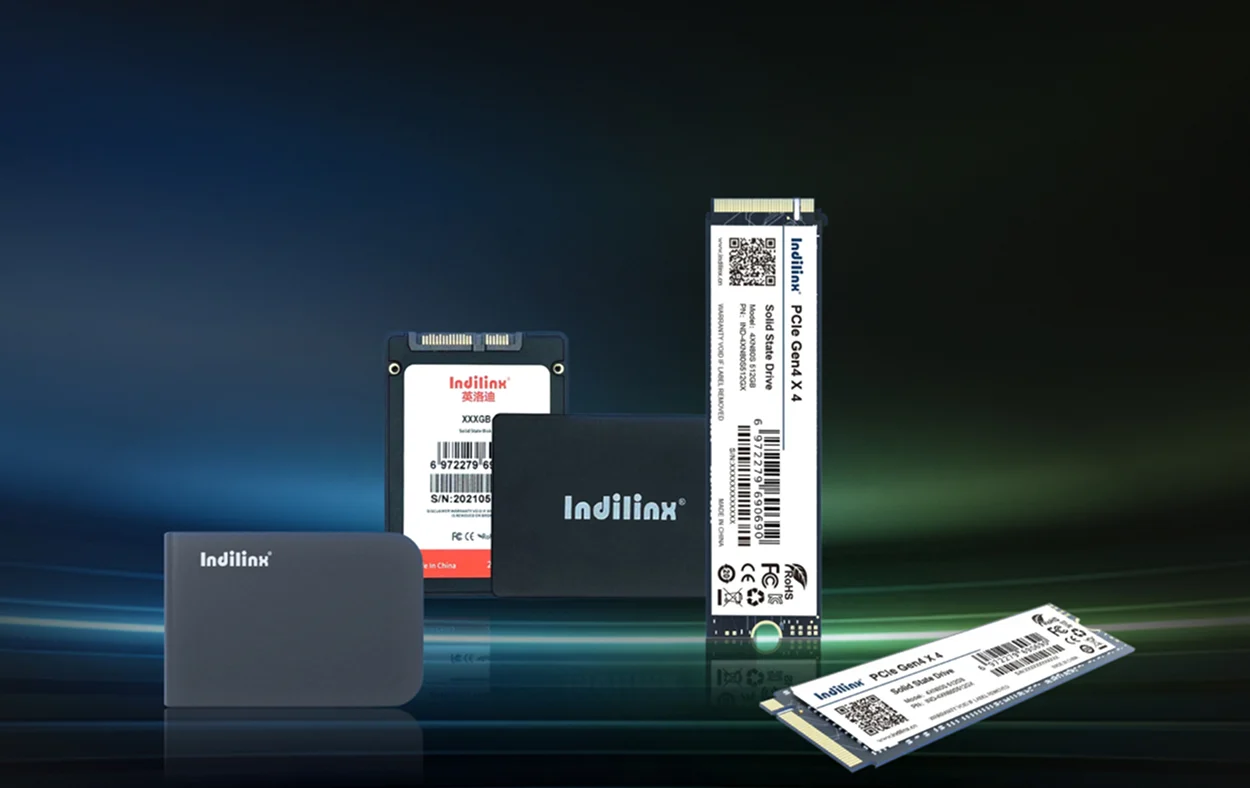
Interface compatibility is an essential factor when integrating an industrial SSD into an existing system. Different industrial platforms may support different storage interfaces, including SATA, PCIe, and NVMe. Each interface provides different levels of bandwidth, communication efficiency, and hardware compatibility, making it necessary to select the appropriate solution according to system requirements.
Before choosing an industrial SSD, engineers should confirm the host system interface, available bandwidth, physical form factor, and required data transfer speed. For example, SATA-based industrial SSDs are commonly used in systems that prioritize compatibility and stable operation, while PCIe and NVMe SSDs are suitable for applications requiring higher data throughput and faster processing capability.
Proper interface selection ensures that the industrial SSD can communicate effectively with the host system and deliver expected performance. Incorrect interface matching may limit storage performance or create integration problems during system deployment.
Industrial SSD Interface Selection Requires Matching Host System Requirements
Selecting the correct interface is an important step when integrating an industrial SSD into an existing hardware system. The interface determines how the SSD communicates with the host platform and directly affects compatibility, available bandwidth, and overall storage efficiency. Industrial systems are usually designed for specific hardware architectures, so the SSD interface must match the requirements of the motherboard, embedded controller, or industrial computer before deployment.
When evaluating an industrial SSD interface, engineers should analyze several system factors, including supported communication protocols, required data transfer speed, available expansion slots, and expected workload characteristics. For example, systems that prioritize long-term stability and broad compatibility may benefit from SATA-based industrial SSDs, while applications involving real-time data processing, edge computing, or high-speed data acquisition may require PCIe or NVMe solutions.
Choosing an interface based on actual system requirements helps ensure that the industrial SSD can operate efficiently without unnecessary limitations. A suitable interface not only improves communication efficiency between the SSD and host system but also reduces compatibility risks during equipment development, installation, and future maintenance.
Industrial SSD Interface Types Provide Different Compatibility and Performance Characteristics
Different industrial SSD interfaces provide different levels of compatibility, bandwidth, and application suitability. SATA-based industrial SSDs remain widely used because of their mature technology, stable communication protocol, and compatibility with many existing industrial platforms. They are often suitable for applications where reliability and long-term availability are more important than maximum transfer speed.
PCIe-based industrial SSDs provide higher bandwidth and are designed for systems that require faster data communication. NVMe technology, which operates through the PCIe interface, can further improve storage efficiency by reducing communication delays between the SSD and host system. These solutions are commonly used in applications that involve large-scale data processing, real-time analytics, or intensive computing workloads.
When selecting an industrial SSD interface, engineers should evaluate both current system requirements and future application expansion. Choosing the right interface ensures that the SSD can provide appropriate performance while maintaining compatibility with the overall hardware architecture.
Industrial SSD Hardware Integration Depends on Physical and Protocol Compatibility
Successful integration of an industrial SSD requires more than selecting the correct interface type. Engineers must also confirm physical compatibility, including drive dimensions, connector design, installation space, power requirements, and mechanical limitations within the target system. Industrial equipment often has customized structures, meaning even a technically suitable SSD may fail to integrate properly if physical specifications are not carefully evaluated.
Protocol compatibility is another important consideration during industrial SSD selection. Different systems may support different communication standards, and an SSD must be fully compatible with the host controller to achieve stable operation. For example, a high-performance NVMe industrial SSD cannot deliver its designed capability if it is installed in a system that only supports SATA communication.
Before deployment, engineers should verify all hardware and communication requirements to avoid unexpected integration problems. Proper compatibility analysis allows the industrial SSD to communicate effectively with the host system, maintain stable performance, and reduce additional development or troubleshooting costs.
Industrial SSD Compatibility Verification Prevents Deployment Problems and Performance Limitations
Compatibility verification plays an important role in preventing storage issues during industrial system deployment. Incorrect interface selection may cause several problems, including reduced data transfer performance, unstable communication, inability to recognize the SSD, or complete system incompatibility. These problems can increase development time and create additional maintenance challenges after deployment.
A complete verification process should include checking interface specifications, communication protocols, physical installation requirements, firmware support, and system configuration. Engineers should confirm that the selected industrial SSD meets both the technical requirements of the application and the practical limitations of the existing hardware environment.
By performing compatibility checks before installation, users can ensure that the industrial SSD operates as expected throughout the system lifecycle. This approach improves deployment efficiency, reduces potential failures, and helps industrial equipment maintain reliable storage performance over long-term operation.
Consider Industrial SSD Lifecycle Reliability and Long-Term Availability
Industrial equipment is often designed for long service periods, which means storage devices must provide reliable operation throughout the entire system lifecycle. Unlike consumer SSDs that may be upgraded frequently, industrial SSDs are usually expected to remain stable for many years without frequent replacement. Therefore, lifecycle reliability is an important consideration during SSD selection.
When evaluating an industrial SSD, users should consider factors such as firmware stability, failure management capability, product consistency, and long-term supply availability. Stable firmware can improve storage reliability by optimizing internal operations and reducing potential data errors during continuous usage. Supplier support and product availability are also important for industrial projects with long development cycles.
Choosing an industrial SSD with strong lifecycle support helps reduce maintenance costs and prevent system downtime caused by storage replacement issues. Reliable industrial SSD solutions provide long-term operational stability and support the continuous development of industrial equipment.
Industrial SSD Firmware Stability Supports Long-Term System Operation
Firmware stability is a critical factor that determines whether an industrial SSD can maintain reliable performance throughout long-term operation. Unlike consumer SSDs that are usually replaced during regular hardware upgrades, industrial SSDs are commonly installed inside automation equipment, medical systems, transportation platforms, and embedded devices that may operate continuously for many years. Stable firmware helps control internal SSD processes, optimize communication between the controller and NAND Flash, and reduce unexpected performance changes caused by complex workloads.
When evaluating an industrial SSD, users should consider whether the firmware has been designed for industrial environments with continuous operation requirements. Mature firmware solutions can improve data management efficiency, support advanced error handling mechanisms, and maintain consistent storage performance under different workload conditions. This is especially important for systems where storage interruptions may affect equipment operation or production efficiency.
Industrial SSD Lifecycle Support Reduces Maintenance and Replacement Risks
Industrial equipment often requires long development cycles and extended service periods, making lifecycle support an important factor when selecting an industrial SSD. A storage solution that performs well initially but lacks long-term availability may create problems during future maintenance, system expansion, or equipment upgrades. Industrial manufacturers need SSD products that can remain available and consistent throughout the expected operating period of their systems.
When evaluating an industrial SSD supplier, users should consider product availability, technical support capability, firmware update policies, and consistency between different production batches. Stable supply ensures that manufacturers can continue producing equipment without frequent redesigns caused by storage component changes. This is particularly important for industrial projects that require strict hardware validation and long-term product management.
Industrial SSD Product Consistency Ensures Reliable Long-Term Deployment
Product consistency is essential for industrial applications because storage devices are often deployed across large numbers of machines or systems. Unlike consumer products where minor hardware differences may have limited impact, industrial equipment requires predictable performance, stable specifications, and reliable compatibility throughout the entire deployment process. Consistent Industrial SSD products help manufacturers maintain the same storage characteristics across different production stages.
A reliable industrial SSD supplier should provide consistent hardware design, firmware configuration, and quality control standards to reduce integration risks. This allows engineers to simplify system testing, improve production efficiency, and reduce potential failures caused by unexpected component variations. Strong product consistency also supports easier maintenance because replacement SSDs can provide the same operational characteristics as the original devices.
Select Industrial SSD Solutions Based on Application Requirements and Reliability Standards

Determining whether an industrial SSD is suitable requires a comprehensive analysis of workload characteristics, environmental conditions, performance requirements, and system compatibility. Different industrial applications have different priorities, and there is no single SSD specification that can meet all requirements. A suitable industrial SSD should be selected according to the actual operating conditions and expected service life of the system.
By evaluating factors such as write endurance, temperature range, NAND Flash quality, controller technology, interface compatibility, and lifecycle support, engineers can identify an industrial SSD that matches their application requirements. This evaluation process helps avoid performance limitations, reliability issues, and unnecessary replacement costs.
A properly selected industrial SSD can provide stable storage performance, reliable data protection, and long-term operational support for industrial systems. Through accurate application analysis and technical evaluation, companies can build more reliable storage solutions for automation, embedded devices, and other industrial applications.